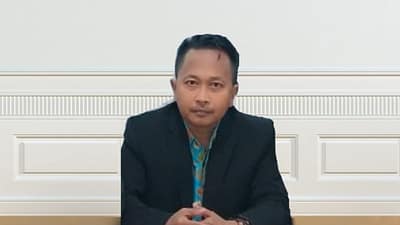


JAKARTA – The Chairman of DPD ARUN Jakarta, Paisal Sangadji, emphasized the importance of firm and consistent law enforcement in responding to national political dynamics, particularly regarding the controversy over statements calling for the removal of President Prabowo Subianto.
According to Paisal, the state must not hesitate to take action against any statements that have the potential to disrupt national stability and undermine the democratic order established through constitutional mechanisms.
“Democracy indeed provides space for freedom of expression, but that freedom must not be misused to promote unconstitutional actions or create public unrest that could divide the nation,” Paisal stated.
He added that the report filed against Saiful Mujani and Islah Bahrawi should be seen as part of efforts to uphold the dignity of the law and maintain public order. In this context, law enforcement authorities have the responsibility to ensure that any alleged violations are handled professionally and transparently.
“Law enforcement must not be subject to the pressure of public opinion or specific political interests. This is precisely where the state must be present to ensure that the rule of law prevails,” he continued.
Paisal also stressed that any effort to change leadership within a democratic system must be carried out through legitimate mechanisms, such as elections or other constitutional procedures, not through provocative narratives that could trigger instability.
Furthermore, he warned that the use of language implying the “overthrow” of a government outside constitutional channels could lead to dangerous interpretations within society, especially in a sensitive socio-political climate.
“This nation must not return to old patterns that prioritize agitation and emotional mobilization. We must learn from history that political instability always brings negative consequences for the people,” he said.
DPD ARUN Jakarta, Paisal added, fully supports law enforcement authorities in investigating this case objectively and fairly, and hopes that the legal process will serve as a collective lesson so that democratic space continues to operate within the proper legal framework.
“This is not about silencing criticism, but about ensuring that criticism is delivered responsibly and does not violate legal boundaries,” he concluded.