
PRIME NEWS POST
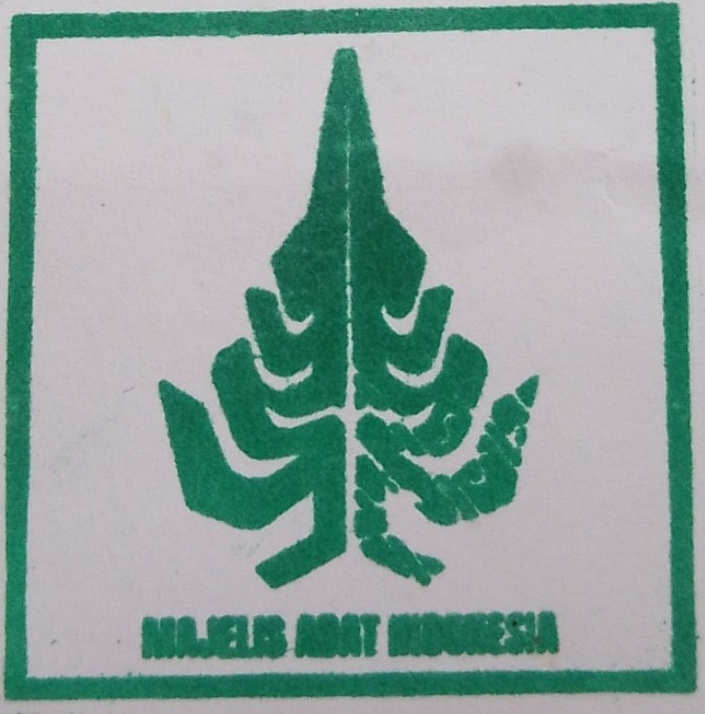
The INDONESIAN – The Majelis Adat Indonesia (MAI, Indonesia’s Customary Council) has firmly reaffirmed its commitment to strengthening the role of customary traditions, culture, and local wisdom as an integral part of the state system of the Unitary State of the Republic of Indonesia (NKRI). This initiative is framed as a national effort to build an Indonesian democracy deeply rooted in the nation’s identity, aligned with the values of Pancasila and the principles of the 1945 Constitution of the Republic of Indonesia.
Before the establishment of NKRI, kingdoms and sultanates across the Nusantara archipelago served as key pillars in maintaining social harmony, preserving noble cultural values, and strengthening unity amid diversity. Kings and sultans were not merely historical symbols, but concrete representations of wisdom, civilizational continuity, and moral leadership passed down through generations.
Throughout the nation’s history, these customary leaders have played dual roles as protectors of communities, guardians of public morality, guides for policy-making, and role models in upholding national unity and integrity. The values they uphold remain relevant today, particularly in addressing challenges posed by globalization, cultural disruption, and threats to national identity and social cohesion.
Strengthening Customary Representation: From Legislative to Executive Bodies
MAI asserts that Indonesian democracy should not be reduced to an electoral mechanism based solely on majority votes. Instead, it must be fully understood as a deliberative democracy, as mandated by the Fourth Principle of Pancasila: “Democracy guided by the wisdom of deliberation and representation.”
To achieve this, MAI proposes establishing and strengthening customary representation in various state institutions. In addition to advocating for their presence in legislative bodies such as the People’s Consultative Assembly (MPR RI), the House of Representatives (DPR RI), and the Regional Representative Council (DPD RI) through special factions, MAI also calls for integrating the strategic role of customary leaders into executive institutions.
In line with the visionary direction of His Excellency HRM. Soekarna, MAI believes that including customary leaders in the cabinet for instance, as Minister of Agrarian Affairs and Spatial Planning/Head of the National Land Agency or in other strategic positions – would bring policy focus to critical issues such as customary land rights. This step is deemed more effective and direct in formulating public policies that protect the substantive rights of customary communities.
Revitalizing Strategic Advisory Body
Furthermore, MAI supports calls to reinstate the Supreme Advisory Council (Dewan Pertimbangan Agung, DPA) as mandated in Chapter IV, Article 16 of the 1945 Constitution (before amendments). The council is viewed as a more appropriate and strategic platform for kings, sultans, and customary leaders to provide direct wisdom and counsel to the President, rather than being entangled in electoral political contests in parliament that follow the “one man, one vote” principle. Within the DPA, the voice of customary wisdom would not be overshadowed by majority vote logic, allowing it to serve as the government’s primary advisor on national, cultural, and moral issues.
Kings and Sultans as Strategic Partners of the State
Within the context of NKRI, kings and sultans hold an irreplaceable strategic position as strengtheners of national identity and unifiers of the nation. They are key pillars of values such as tolerance, diversity, brotherhood, and equality, as mandated in the Preamble to the 1945 Constitution.
MAI is confident that these customary leaders – whether serving in executive, legislative, or advisory bodies – can be strategic partners of the government in national development. With their moral, cultural, and historical influence, they can bridge effective communication between the state and customary communities, encourage public participation, and strengthen social cohesion.
Cultural Diplomacy and Representation of Professions
As part of authentic national diplomacy, MAI proposes appointing Customary Tourism and Cultural Envoys at every Indonesian diplomatic mission abroad. These customary figures are expected to serve as Indonesia’s authentic face on the global stage.
In addition to customary representation, MAI emphasizes the importance of including representatives of grassroots professions – such as farmers, fishermen, workers, and other members of the people’s economy – in the state system, to be appointed through consensus-based deliberation (musyawarah mufakat) within their respective communities.
The Majelis Adat Indonesia (MAI) serves as the nation’s moral guide, guardian of noble ancestral values, and bridge between tradition, spirituality, and modern progress, with a mission to uphold customary sovereignty within the state system.
MAI’s vision is clear: “To uphold the dignity and sovereignty of customary traditions as the moral spirit, source of national ethics, and guide for Nusantara civilization toward a civilized, sovereign, and dignified Indonesia.”
The council is grounded in the philosophical principle “Customary law is based on religious law, religious law is based on the Quran – with roots in the earth and reaching to the sky.” MAI believes that a state without customary traditions will lose its ethical direction, while customary traditions without the state will lose their vitality. Thus, the two must proceed in harmony and wisdom.
Paduka Yangmulia M. Rafik Datuak Rajo Kuaso Cumati Koto Piliang Langgam Nan Tujuh Kerajaan Pagaruyung Nusa, West Sumatra
Secretary-General, Majelis Adat Indonesia (MAI)
Based on the ROYAL DECREE OF NUSANTARA, Special Number: 0455.2210.2025.
His Excellency HRM. Soekarna
Founding Father of the Republic of Indonesia,
Nusantara Customary Leader