

PRIME NEWS POST
The INDONESIAN, (Aceh)– Efforts to prevent forest and land fires cannot rely solely on extinguishing blazes once they have spread. Early prevention through empowering local communities is the key to protecting forest areas while safeguarding people’s livelihoods.
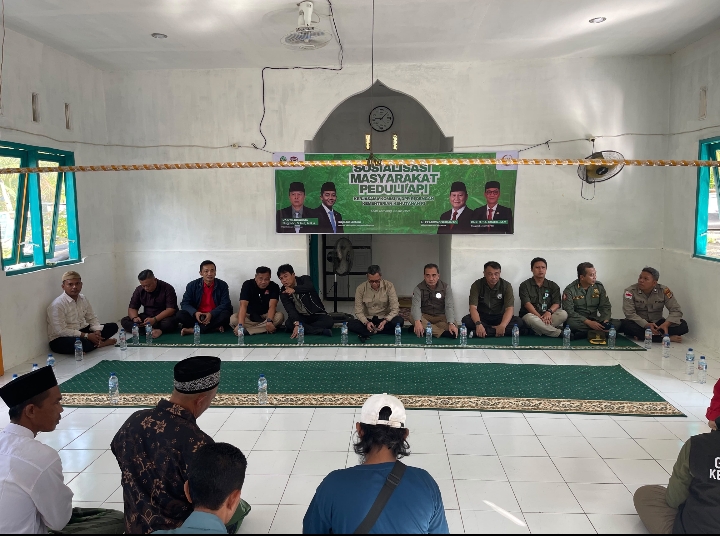
This commitment was put into action by Member of Commission IV of the House of Representatives Dr. Ir. H. T.A. Khalid, M.M., through a public outreach event for the Fire Care Community (MPA), held jointly by Commission IV DPR RI and the Ministry of Environment and Forestry in Sekumur Village, Aceh Tamiang Regency, on Thursday (23/7/2026).
During the event, T.A. Khalid emphasized that success in handling forest and land fires is measured not only by firefighting capacity, but also by how prepared communities are to stop fires before they start.
“A shift in mindset must begin now. The State must not only respond when fires break out—it must build communities equipped to prevent hazards, identify risks, and act swiftly before disaster strikes,” T.A. Khalid stated.
According to the legislator for Electoral District Aceh II, the threat of forest and land fires in Aceh rises every dry season. Beyond destroying forest cover, fires cause economic losses, harm public health, damage ecosystems, and endanger agriculture and plantation sectors that sustain local livelihoods.
For this reason, he said, response strategies must shift from a reactive approach to a preventive one, placing communities on the frontline.
Through the Fire Care Community program, residents receive training in early detection, fire prevention techniques, reporting procedures, and coordination with relevant authorities. This approach is proven more effective at containing risks before they escalate.
As a concrete step in advancing the aspirations of communities in fire-prone areas, T.A. Khalid also symbolically handed over forest and land firefighting equipment to MPA representatives from Sekumur Village. The aid is intended to boost local readiness for initial response to potential fires.
“We want communities not just to receive aid, but to know how to use it effectively. When local capacity grows, so does the village’s resilience against fire threats,” he added.
Also present, Director-General of Law Enforcement at the Ministry of Environment and Forestry Dr. Dwi Januanto Nugroho, S.Hut., M.B.A., affirmed that law enforcement remains a vital instrument in forest protection. T.A. Khalid noted, however, that safeguarding forests will be far more effective when built on synergy between education, community empowerment, oversight, and legal enforcement.
He described this collaboration as a cornerstone of sustainable forest governance. Forests are not only ecological assets—they sustain livelihoods and serve as long-term development capital.
As a member of Commission IV overseeing forestry, environment, agriculture, and maritime affairs, T.A. Khalid reaffirmed his commitment to champion stronger community empowerment programs in fire-prone regions, through budget support, capacity-building for MPA groups, and improved cross-sector coordination.
“Forests are an investment for the future. Protecting them is not the government’s burden alone—it is a shared responsibility. When communities become part of the solution, sustainable development becomes far more achievable,” he stressed.
He expressed hope that Sekumur Village will serve as a model of successful community-led fire prevention, so similar approaches can be replicated across the country to strengthen environmental resilience and advance sustainable forestry.
Reported from various media sources //photo from Google documents // contribution by Prime News Post international online media // news.paper
Related News