
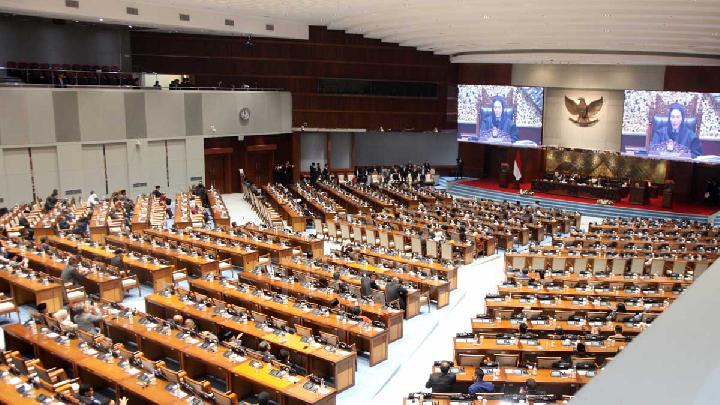
Jakarta – Discussions on the revision of Indonesia’s Election Law in the House of Representatives (DPR) are now entering a decisive stage. Commission II of the DPR has been tasked with preparing the academic paper and draft bill for the revision, which is included in the 2026 National Legislation Program (Prolegnas).
Amid this process, the Indonesian Election Studies Center (PUSKAPI) has stressed that the revision must go beyond technical electoral matters. Strengthening the independence of election management bodies and electoral law enforcement must be at the heart of the proposed changes.
PUSKAPI Executive Director and Public Policy Observer, Zaenal Abidin Riam, stated that the quality of democracy largely depends on the credibility of the institutions responsible for organizing and supervising elections.
According to him, PUSKAPI has identified four key pillars that should be incorporated into the revised law: transparent and independent selection processes, oversight and accountability, neutrality of state officials, and institutional coordination and dispute resolution.
The first pillar concerns the selection process for members of the General Elections Commission (KPU) and the Election Supervisory Agency (Bawaslu). Zaenal believes that transparency and professionalism in the selection process determine whether election officials can perform their duties without political pressure or interference.
“Election management bodies established through closed selection processes will always face public skepticism. The selection of KPU and Bawaslu members must be transparent, professional, and free from political interference, because that is where independence begins,” he said.
The second pillar focuses on oversight and accountability. PUSKAPI calls for stronger action against vote-buying practices and greater transparency in campaign financing.
Zaenal emphasized that existing regulations will lose their meaning if they are not accompanied by consistent sanctions. He also noted that opaque campaign financing creates opportunities for hidden interests to influence political contests.
“Money politics and non-transparent campaign financing are two major factors that undermine electoral integrity. This revision must address both through firm regulations and oversight mechanisms that are accountable to the public,” Zaenal said.
The third pillar concerns the neutrality of state officials. According to Zaenal, the neutrality of civil servants (ASN), the Indonesian National Armed Forces (TNI), and the Indonesian National Police (Polri) must be maintained in accordance with applicable laws and regulations.
He also highlighted the importance of preventing the misuse of state facilities during electoral contests, as such practices can create an uneven playing field among election participants.
The fourth pillar addresses inter-agency coordination and electoral dispute resolution. Zaenal believes that overlapping institutional authorities have often weakened the handling of electoral violations.
“Electoral disputes must be resolved swiftly, fairly, and consistently. Without solid coordination among institutions, electoral law enforcement will operate in fragmented ways, making electoral justice difficult to achieve,” he stressed.
PUSKAPI’s recommendations come as the DPR begins accelerating discussions on the revision. Commission II is targeting completion of the revised Election Law no later than March 2027.
PUSKAPI has cautioned that the proposed timeline must not come at the expense of substantive quality or meaningful public participation.
PUSKAPI hopes that the DPR and the government will provide broad opportunities for academics, election management bodies, and civil society organizations to participate in the legislative process, ensuring that the revision does not become merely an agenda driven by political elites.
According to Zaenal, the four pillars proposed by PUSKAPI can serve as a straightforward benchmark for the public to assess the direction and substance of the proposed revision.
He emphasized that credible and trusted elections can only emerge from independent election management bodies and fair electoral law enforcement.