
PRIME NEWS POST
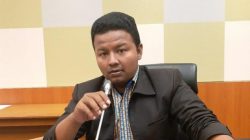
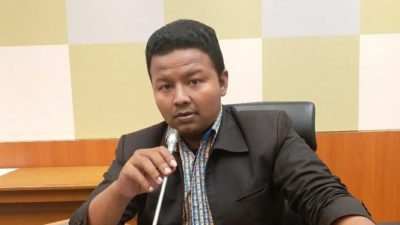
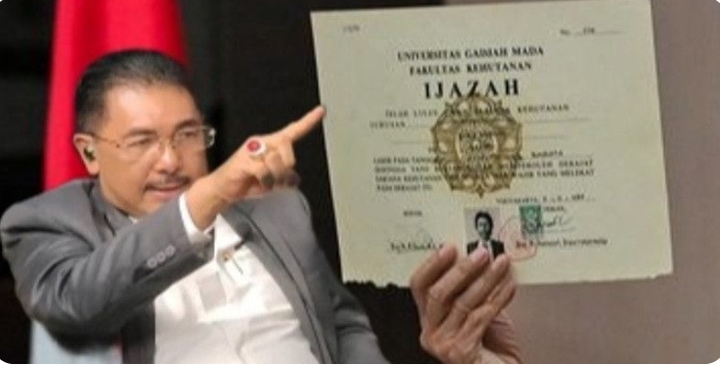
The INDONESIAN (Jakarta)— The controversy over the authenticity of former President Joko Widodo’s diploma must not remain an endless debate. Legal practitioner Santrawan Paparang has called for consideration of testing by an independent forensic institution to deliver legal certainty and answer the public’s lingering questions.
Santrawan Paparang stressed that the diploma issue must be settled through transparent, objective, and scientifically verifiable evidence. He noted that the existing examination by the National Police Forensic Laboratory should be respected, while independent testing could serve as an additional step to strengthen public confidence.
“In a case that draws widespread public attention, the independence of examiners is critical. There must be no room for perceptions of bias. The items to be tested include the document itself, the examination method, the comparison materials, and the validity of the results,” Santrawan said on Saturday (7/11/2026).
He explained that independent testing is not an accusation that the earlier examination was wrong. Instead, a supplementary review can help end public speculation and keep the matter from dragging on as an unresolved public debate.
The dispute resurfaced after Jokowi raised an objection to a request for a new forensic examination of his original diploma during a defamation trial against defendant Roy Suryo at the East Jakarta District Court on Thursday (5/11/2026).
“I object, Your Honor. My diploma has already been tested by the National Police Forensic Laboratory,” Jokowi told the court.
Santrawan said Jokowi’s objection as the document holder deserved consideration. Even so, the panel of judges retains the authority to decide on evidence‑gathering based on procedural law, the relevance of the evidence, and the needs of the trial.
He added that personal rights should not be ignored, yet the public’s right to legal certainty also must not be set aside.
“This matter must not end with people simply choosing whether to believe one side or the other. The law must work based on facts and evidence, not public perception,” Santrawan emphasized.
He also warned against rushing to conclusions on any alleged criminal offense. He laid out three core qualifications for establishing criminal liability: malicious intent (voornemen), the physical guilty act (actus reus), and the relevant mental state or fault (mens rea).
Santrawan cited the criminal‑law principle actus non facit reum nisi mens sit rea, meaning an act alone does not make a person guilty unless the required mental element of fault is also present.
For that reason, he said, the question of document authenticity must be clearly separated from the question of proving a criminal offense, because each requires different standards of proof and the two issues must not be mixed together.
“Proving the authenticity of a document is different from proving a criminal offense. If a violation of law is alleged, every element of the crime must be proven in accordance with the applicable rules,” Santrawan stated.
He also noted that anyone challenging the diploma’s authenticity must back their claim with evidence, while those asserting the document is genuine must also respect the formal legal process for verifying evidence.
Pre‑judgment before the legal process concludes must be avoided. The truth cannot be decided by popularity, political power, or a person’s position.
Santrawan said the judges should weigh every request for additional testing independently and objectively under the rules of criminal procedure.
Ultimately, he said, independent testing is not meant to favor Roy Suryo or harm Jokowi. Its purpose is to establish the truth through facts, scientific assessment, and proper legal procedure.
“The truth should not be afraid of being tested. Independence must not be compromised. The law must not serve anyone’s interests. The public should not be left waiting indefinitely for legal certainty,” Santrawan concluded.