
PRIME NEWS POST
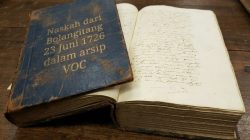
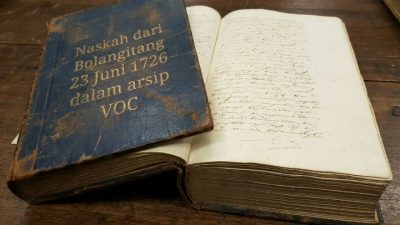
The INDONESIAN , (Jakarta)— Beneath the long history of the Indonesian archipelago lie millions of documents preserving vital records of political dynamics, trade, governance, and social life across the 17th and 18th centuries. One of the richest documentary sources for this period is the archive of the Vereenigde Oostindische Compagnie (VOC) — the Dutch East India Company.
The VOC archive comprises an estimated 25 million pages held across institutions in several countries, including Indonesia, the Netherlands, Sri Lanka, India, and South Africa. This vast collection makes it one of the most important sources for understanding the development of the early modern world, particularly across Asia and Africa.
Its historical significance earned international recognition when the archive was inscribed on the UNESCO Memory of the World Register in 2003.
The value of these records lies not only in their sheer volume but also in their comprehensiveness and proximity to the events they document. Most are contemporary primary sources written by officials, administrators, sailors, merchants, and others directly involved in the events of their time.
The collection includes ship journals, reports from Governors-General, government correspondence, treaties with local rulers, court records, trade statistics, and regional administration reports.
Recording Kingdoms and Life Across the Archipelago
Perhaps most remarkably, the VOC archive extends far beyond trade in spices and economic monopolies.
It contains detailed accounts of indigenous social structures, relations between kingdoms, political dynamics and royal successions, demographics, slavery, law, taxation, mining, territorial mapping, and even the genealogies and family ties of ruling dynasties.
These documents offer historians unprecedented opportunities to reconstruct events that have remained poorly documented or largely overlooked in conventional narratives of Indonesian history.
The archive also stands out for its remarkably systematic administration. As a company granted extensive powers by the Dutch government, the VOC exercised authority over trade, governance, diplomacy, and military operations across its territories.
Records were kept systematically and hierarchically, including regular correspondence between VOC offices across Asia and its governing body in the Netherlands — the Heeren XVII (Council of Seventeen).
Letters from Kings: Diplomatic Correspondence Translated
Among the most fascinating materials are letters sent by kings, nobles, and regional leaders across the archipelago to VOC authorities.
Received primarily through the Governor-General in Batavia and regional offices such as Ternate, these letters were typically translated from their original languages into Dutch for colonial administrative purposes. Many bear the annotation “Translaat Brief” — meaning “Translated Letter.”
Such records are invaluable to historical research. Through these translations, scholars can trace diplomatic exchanges, power relations, petitions, treaties, and disputes between local rulers and the VOC.
That said, these documents must be read with care — particularly regarding language nuances, political terminology of the era, the identity of senders, and the colonial perspective that shaped how they were recorded. Ultimately, the VOC archive preserves not only colonial activities but also the voices, diplomacy, and agency of the archipelago’s own rulers and communities.
Pantchiallang: The Vessels That Carried Communication
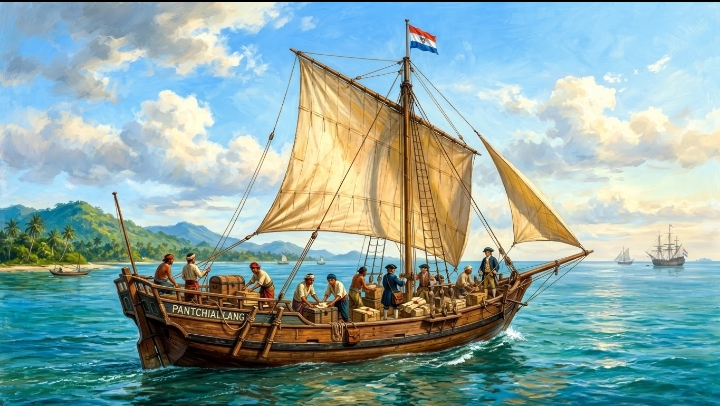
Beyond written records, the VOC relied heavily on maritime transport to connect its far‑flung network. One distinctive vessel type was the pantchiallang — a traditional sailing craft native to the archipelago that the VOC adopted and adapted for its own logistical needs.
Their widespread use demonstrates how the VOC drew upon local maritime knowledge and technology to sustain trade, communication, and administration across the Indonesian islands. These shipping routes and courier networks were the essential infrastructure that allowed information, official instructions, reports, and diplomatic correspondence to flow across the archipelago.
Colonial Records as a Gateway to History
The scale of the VOC archive opens extraordinary research opportunities — for historians, scholars, cultural advocates, descendants of royal houses, and younger generations seeking to reclaim their history.
However, colonial sources must be read critically and never accepted uncritically as the sole version of the past. The VOC’s perspective must always be weighed against local sources — indigenous manuscripts, inscriptions, oral traditions, and other historical remains.
When approached with balance and care, these documents become powerful tools for reconstructing a fuller, more accurate picture of the past.
Ultimately, those 25 million pages are far more than a legacy of colonial rule. Within them lie countless fragments of history — of kingdoms, peoples, trade routes, diplomacy, and the unfolding civilization of the archipelago. Unlocking them is like reopening a window onto the past — one that allows today’s generation to understand their history more deeply, more critically, and grounded in evidence.
— End —