
PRIME NEWS POST
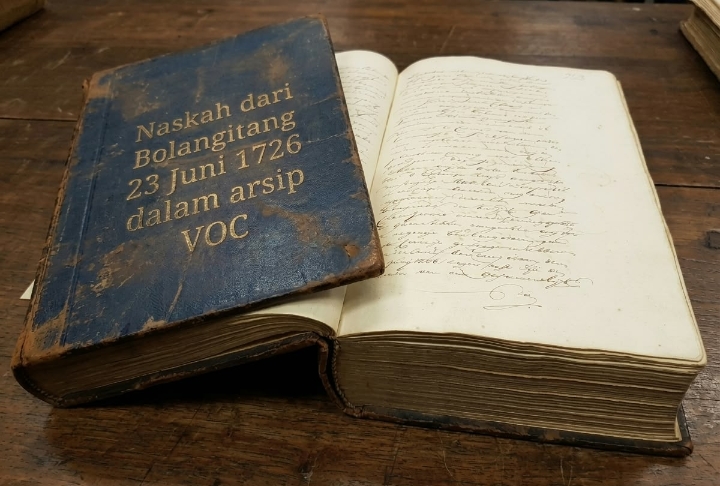
BOLANGITANG, NORTH SULAWESI — An ancient archive document from the Dutch East India Company (VOC), dated 23 June 1726, sheds new light on the political dynamics and traditional leadership succession along the northern coast of Sulawesi. Handwritten in archaic Dutch and preserved in the National Archives of the Netherlands, the document was discovered by North Sulawesi history researchers Iftiqar S.A. Ponto and Giovanni R. Babay. It records a heated dispute over the royal succession in the kingdom of Bolangitang, involving both VOC officials and local customary leaders.
Written in the distinctive cursive script of the 18th century, the document contains vital information about royal lineage, the legitimacy of rule, and the complex relationship between traditional elites and the colonial administration of the time. Personal names and titles appear as phonetically transcribed by VOC scribes, requiring careful analysis and interpretation.
A Succession Plan Unravels
According to the account, Queen Magdalena Lingkakoa had no biological children. To secure the future of the kingdom, she raised and designated Jeremias Solana, the son of her sister Doungo, as her successor.
Together with the Bobato — the kingdom’s council of customary elders — Queen Magdalena reached an agreement with VOC Fiscal Jacob Claasz, formally appointing Jeremias Solana as the heir apparent to the throne of Bolangitang.
However, the plan did not unfold as expected. The arrival of senior VOC Commissioner Alsteijn reversed the political consensus that had been reached. Jeremias Solana’s installation was cancelled, creating a crisis of legitimacy and continuity within the kingdom.
Kaicil Claas Ponto Enters the Succession Fray
Amid this impasse, the council of elders took independent political action. Led by Sengadje Matteüs Limjoedis, titled Kapiten, and other senior nobles, the elders presented a young royal heir named Tuan Claas Ponto, also referred to as Kitzil or Kaicil — a term meaning “young prince.”
Identified in the document as the son of nobleman Jogugu Jeremias Solano, Kaicil Claas Ponto was put forward as an alternative candidate for the throne. This development occurred at a moment when questions of lineage and legitimacy were deeply contested among local elites, illustrating that authority depended not only on bloodline but also on the backing of customary institutions and recognition by ruling powers.
Intertwined Custom and Colonial Power
This archival discovery offers invaluable insight into early‑18th‑century politics in the greater Bolaang Mongondow region. It reveals how traditional governance, royal succession, and VOC colonial administration were deeply interconnected.
Titles such as Bobato, Sengadje, and Kaicil also point to broader maritime cultural and political networks spanning eastern Indonesia, providing clues to historical connections across the Maluku and North Sulawesi spheres of influence.
The document further demonstrates how colonial officials could override local consensus, reshaping political outcomes and influencing which candidates received elite backing. It underscores the critical role of colonial archives in complementing oral traditions and reconstructing royal genealogies across the archipelago.
“This 18th‑century manuscript proves that local history lives not only in oral tradition but across languages and cultures in written records. Preserving and studying these documents is essential to clarifying lineage and understanding our past with greater clarity,” said Iftiqar S.A. Ponto. (*)