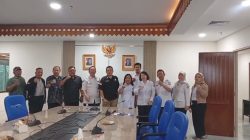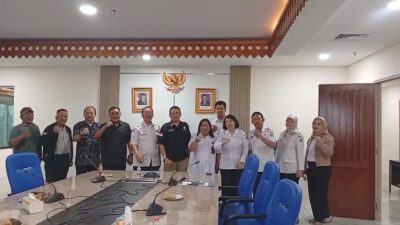

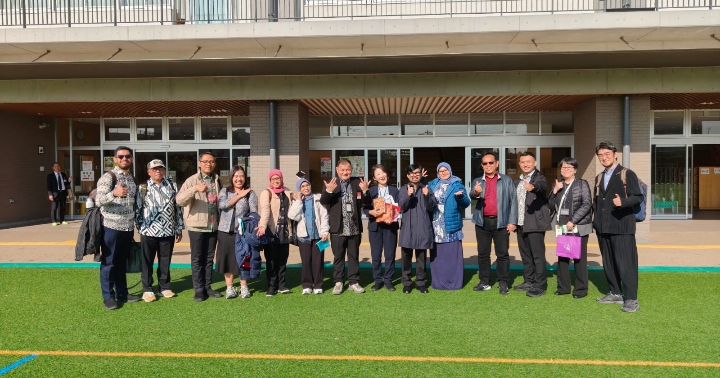
TOKYO, JAPAN — School lunch programs are far more than just feeding students. A single plate of school‑served food touches education policy, public health, food security, farmer empowerment, and environmental responsibility. That core philosophy became one of the key takeaways for an Indonesian delegation visiting Adachi City, Tokyo, Japan.
Led by Dr. Teuku Fahsul Falah, S.Sos., M.Si., the Indonesian delegation studied school‑lunch governance, nutrition education, and food‑waste reduction during a study‑visit program review held in Japan from November 8‑14, 2026.
The field observation took place on Thursday, November 12, 2026, at the school kitchen facility and Shikahama Mirai Elementary School in Adachi. The group received briefings from Reiko Matsumoto, Adachi’s school‑lunch program officer, the city’s nutrition‑management team, and Shikahama Mirai Elementary School Principal Ikeno.
For Dr. Teuku Fahsul Falah and the rest of the delegation, Adachi’s model offered a clear example of how well‑designed public policy can deliver tangible change, built on careful planning, clear service standards, and data‑driven evaluation.
## Adachi Cuts School Food Waste by Roughly 70 Percent
One standout result that drew the delegation’s attention was Adachi’s success in bringing school food waste down from 381 tons to 113 tons the previous year — a reduction of approximately 70 percent.
That figure represents much more than waste reduction. It also means a higher share of the food served is being consumed, delivering the intended nutritional benefits for children.
The backbone of Adachi’s success is its daily evaluation system. Every school measures leftover food, and the city government compiles the data. When leftover portions rise, professional nutritionists step in to assess the issue and recommend menu or service improvements.
The system makes clear that school food programs do not end once meals are handed out. The local government maintains accountability for ensuring students accept, enjoy, and actually eat the food provided.
## School Kitchens as Centers for Education and Public Health
Since 2007, Adachi has run its popular “Delicious School Lunch” or Oishii Kyushoku initiative, which frames school meals as part of formal food education, known locally as shokuiku.
All 103 of the city’s elementary and junior‑high schools operate their own on‑site kitchens, supported by dedicated nutritionists who design menus tailored to students’ nutritional requirements.
Strict food‑safety protocols are enforced. Meals must be heated to a core temperature of 75 °C for a minimum of one minute, and served no later than two hours after cooking.
The model demonstrates that school food service requires professional, end‑to‑end management, from raw‑ingredient selection, food preparation, and hygiene monitoring, all the way through to serving students.
## Connecting Local Farmers, Schools, and the Dining Table
Another notable feature of the Adachi program is the direct involvement of local farmers in the school food supply chain.
Every November, the city holds Komatsuna Lunch Day. Komatsuna leafy greens supplied by JA Tokyo Smile farmer cooperatives are distributed free of charge and prepared into school‑lunch menus.
There is also a program using premium Koshihikari rice from Uonuma. Junior‑high‑school students take part in rice‑planting and harvesting activities; the harvested rice is then served as part of their school lunch.
The hands‑on activities help children learn about food origins, understand agricultural production, and appreciate farmers’ work. For Indonesia, a nation rich in local food commodities, the model offers a blueprint for how schools can support the local community’s economy while introducing regional farm products to younger generations.
## Nutrition Education Built on Children’s Daily Habits
Adachi’s food‑education framework has three main targets: helping children get used to eating vegetables, teaching them how to select nutritionally balanced meals, and building basic independent cooking skills.
Students are actively included in program activities, from menu selection and home‑economics lessons to developing their own original food recipes. A school‑lunch menu‑creation competition regularly draws more than 7,000 participants, with the winning recipes selected for actual school lunch service.
The program shows that nutrition education cannot rely only on classroom theory. Children learn best through direct experience, tasting new foods, and forming healthy daily eating habits.
## Sustainability Remains a Key Challenge
Despite its strong results, Adachi’s program still faces hurdles. The city introduced free school lunches in 2023, with food‑ingredient costs running at roughly 3 billion yen per year. Rising food prices and ongoing facility‑maintenance needs continue to put pressure on the municipal budget.
Adachi has responded with private‑sector innovation partnerships. Selected school‑lunch menus are marketed through the 7‑Eleven convenience‑store network and developed into home meal‑kit products, so families can recreate the school meals at home.
That component of the program illustrates that sustainable public services require continuous innovation, strong cross‑sector partnerships, and careful cost management as operating expenses shift over time.
## Bringing Japan’s Lessons Back to Strengthen Indonesian Policy
The Indonesian delegation led by Dr. Teuku Fahsul Falah consisted of ten participants drawn from central‑government agencies, local‑government bodies, the Ministry of Transmigration, and civil‑society organizations.
The members included Hana Widuri Hasibuan, S.IP., M.Si. (Head of Finance Section, BPSDM Ministry of Home Affairs); Chandra Varendra Yoga, S.Psi., MBA (Junior Planning Officer, BPSDM Kemendagri); Imam Fatkuroji (Head of Bapperida, Pringsewu Regency); Budi Sarwoto (Head of PMDes Office, East Java Provincial Government); Dewi Setiyawati (Head of Bappelitbangda, North Lampung Regency); Sevina Mahardini (Head of Rida Division, Pekalongan City Bapperida); Jeffri Anthone Sapulette (Ministry of Transmigration); plus Imanuel Djahi and Damayanti Siregar from the Nusantara Sejati Foundation.
Cross‑sector participation is critical, because food and nutrition policy cannot succeed in isolation. It requires coordination across government, education institutions, the agriculture sector, health workers, business stakeholders, and the wider public.
Adachi’s experience carries an important message for Indonesia: the success of nutritious‑meal programs should never be measured only by the quantity of food distributed or the size of the budget allocated. Success metrics must also include nutrition quality, food safety, positive behavioral change among children, food‑waste reduction, and measurable economic benefits for local communities.
Ultimately, a single plate of school lunch can function as a powerful human‑development tool. That is the core lesson from Adachi: building a healthy younger generation starts with measurable policy, sustainable education, and a genuine commitment to children’s future. (Editor)
Do you want me to condense this further into a shorter, one‑paragraph news brief for social‑media posting?