
PRIME NEWS POST
The INDONESIAN, (SEMARANG)— Indonesia’s food security cannot be measured solely by rice stockpiles or self‑sufficiency targets. Behind those figures, the nation faces a fundamental problem that risks undermining its long‑term food future: a shrinking farming workforce and slow regeneration within the agriculture sector.
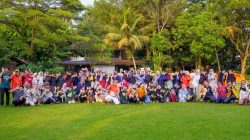
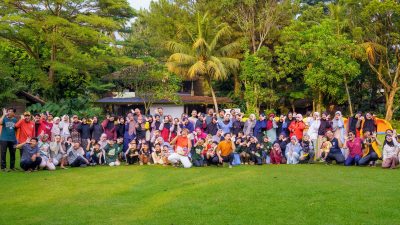
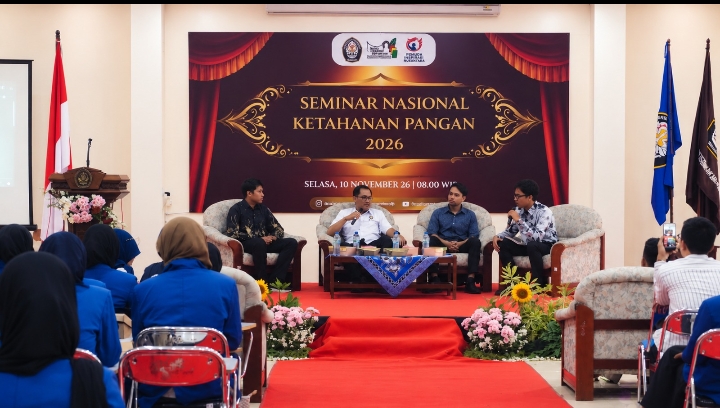
The issue took centre stage at the 2026 National Seminar on Food Security, titled the Indonesia Food‑Security Action Seminar (SAKTI), organised by the Student Executive Board of the Faculty of Animal and Agricultural Sciences (FPP), Universitas Diponegoro (Undip), together with Pemuda Inspirasi Nusantara, held on Tuesday (10/11/2026) at the FPP Undip Auditorium, Tembalang Campus, Semarang.
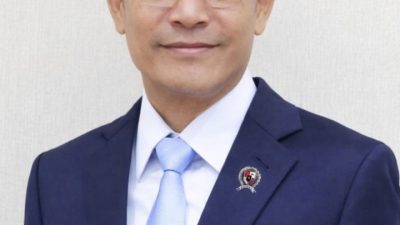
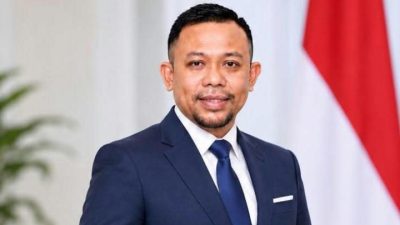
Carrying the theme “Collaboration of the Young Generation to Strengthen Indonesia’s Food Security”, the seminar featured Prof. Dr. Ir. Bambang Waluyo Hadi Eko Prasetiyono, M.S., M.Agr., Head of BPK2U Undip; Muhammad Khoirur Rijal, Director of PT Ruang Indonesia Lestari (Ifarm); and Gafur Agus Rony, Undip Agribusiness alumnus and former chairman of the FPP Undip Student Executive Board.
The discussion raised a critical question: even if current food supplies are relatively stable, who will guarantee Indonesia’s food‑production capacity a decade from now?
Strong Food Stocks, but Farmer Regeneration Looms as a Risk
Gafur Agus Rony explained that food security must be assessed across four core dimensions: availability, affordability, utilisation, and sustainability.
On the availability front, Indonesia’s position appears relatively solid. Government rice reserves stood at 5.3 million tonnes in June 2026, while the absorption of farmer‑harvested grain in the first half of 2026 was equivalent to 3.3 million tonnes of rice.
Still, Gafur stressed that those positive numbers must not make the government and public overlook the sustainability side of national food security.
For affordability, the government’s purchasing price (HPP) for dry harvested grain, set at Rp6,500 per kilogram, needs to be properly implemented to benefit both farmers and consumers.
On utilisation, national food‑consumption deficiency was recorded at 7.89 percent in 2025, with large gaps across regions. In Central Java, the range was 4.06‑13.9 percent across regencies and cities, while the figure for the Papua Highlands stood between 16.64‑43.15 percent.
The most worrying challenge, according to Gafur, lies in sustainability.
Indonesia’s farmer population dropped from 31.70 million people in 2013 to 29.34 million in 2023.
“The question is whether we still have enough farmers and human resources for agriculture. Self‑sufficiency focuses on output, but food security requires all four pillars. If we run out of farmers, today’s stockpiles will mean nothing,” Gafur said.
Prof. Bambang reinforced that definition, describing food security as a condition where all people, at all times, have physical, economic, and social access to sufficient, nutritious food for healthy, productive lives.
Citing the 2023 Agricultural Census from Indonesia’s Central Statistics Agency (BPS), only around 2.14 percent of farmers are from Generation Z, while most agricultural operators are aged above 45.
Prof. Bambang noted that young people’s low interest in farming stems from several factors: the profession’s tough, low‑prestige image, unstable income, limited land and capital access, and a lack of exposure to modern agribusiness.
Left unaddressed, the trend risks lowering national food‑production capacity, raising import dependence, and pushing up prices for staple goods.
Farming as a Business Opportunity for Young People
Muhammad Khoirur Rijal, Director of PT Ruang Indonesia Lestari (Ifarm), brought an entrepreneurship perspective to the farmer‑regeneration discussion.
An Undip Architecture graduate who began working on hydroponics in 2021, Rijal encouraged young people to rethink farming not merely as production work, but as a business requiring management skills, innovation, and decision‑making.
“People need to understand cultivation, technology, and the business side of agriculture,” Rijal said.
He explained that agricultural entrepreneurs must prepare for risks including pests and disease, climate change, supply‑chain disruptions, and fluctuating crop prices. For that reason, young farmers need to be able to read market opportunities before choosing which commodities or technologies to develop.
Rijal also emphasised appropriate, affordable technology. Innovation does not always require huge upfront investment; young farmers should start with simple, practical field‑tested solutions before scaling up once economic returns are proven.
That principle is applied in Ifarm’s Low‑Cost Smart Greenhouse innovation. The low‑cost hydroponic greenhouse system has an estimated return‑on‑investment period of 10‑19 months, far faster than similar conventional systems that can take roughly four years to pay for themselves.
Students Urged to Move Beyond Being Observers
Prof. Sugiharto, FPP Undip Dean, said food‑security issues are highly relevant to Indonesia’s current challenges, especially climate‑change impacts and El Niño‑related threats to agriculture.
He encouraged students to combine classroom learning with hands‑on farming experience through faculty‑industry partnerships and on‑campus vegetable greenhouse projects. He also hoped the seminar would produce a policy brief for submission to the Ministry of Agriculture.
Abraham, representative of Pemuda Inspirasi Nusantara, noted that food‑sector success depends on three fundamental components: seeds, fertiliser, and water availability. He invited students to directly observe farmers’ real‑world difficulties, including subsidised‑fertiliser distribution and water access across regions.
Lutfi Rois, Chairman of the FPP Undip Student Executive Board, added that food security is about more than food availability — it is about ensuring people’s needs are met. “Students must be more than academics; they have a role in monitoring public policy,” Lutfi said.
Subsidised Fertiliser: Students as Farmers’ Eyes and Ears
One concrete youth‑involvement model highlighted at the seminar was monitoring subsidised‑fertiliser distribution.
Gafur reported that by the end of October 2026, national subsidised‑fertiliser distribution by PT Pupuk Indonesia (Persero) had reached roughly 7.4 million tonnes, or 75 percent of the total 9.8 million‑tonne allocation, with about 1.3 million tonnes of subsidised fertiliser still in stock.
The bigger field‑level challenge, he said, is not supply shortages, but farmer registration, redemption procedures, and compliance with maximum retail prices (HET).
“The fertiliser is there. The problem on the ground is often that farmers are not registered on e‑RDKK, do not know how to collect their allocation, or do not know the official price. That is where young people can step in,” Gafur explained.
He called on students to help socialise the subsidised‑fertiliser rules, including the maximum two‑hectare land‑size requirement and eligible commodity criteria. Students can also check that retailers display official HET information, verify product authenticity using QR codes on packaging, and report suspected violations through official channels.
“Agriculture students doing field work or returning to their home villages can be the eyes and ears for farmers. Report any retailer selling above the set price or selling counterfeit fertiliser,” Gafur said.
From Observers to Active Food‑Security Stakeholders
The SAKTI 2026 seminar reinforced that young Indonesians have a major role to play in the transformation of the country’s agriculture sector.
Prof. Bambang outlined three strategic youth‑engagement areas: technological innovation through smart farming, IoT, drones, and artificial intelligence; business modernisation via agritech start‑ups and digital market platforms; and public education to reshape society’s negative stigma toward farming.
Gafur, meanwhile, urged students to act as data‑driven policy monitors, local‑food‑diversification promoters, and entrepreneurs who can process cassava, sweet potato, corn, sago, and taro into higher‑value products.
Small, everyday actions also matter: learning food‑policy frameworks, observing local agricultural problems, buying local food products, developing urban farming, and joining food‑waste‑reduction movements.
The seminar’s core message was clear: food security cannot be the sole responsibility of the government or farmers. Real collaboration is needed among students, youth, academics, practitioners, business actors, and policymakers.
Young Indonesians must not remain spectators in agriculture‑sector discussions. They must become part of the solution, helping to build a future where farming is an attractive, productive, and economically promising career.
No matter how large Indonesia’s current food reserves are, they will not secure the nation’s future without a new generation willing to grow and produce food. As Prof. Bambang put it, farmers and livestock breeders are the nation’s food heroes — and their regeneration is no longer an option, but an urgent necessity.
Tagline: No Farmer, No Food. Without farmers, there is no future for national food security.
Reported from various media sources //photo from Google documents // contribution by Prime News Post international online media // news.paper