
PRIME NEWS POST
The INDONESIAN , (Jakarta)— Let us draw back the curtain on the hypocrisy of the Western world order that has long been fed to us through textbooks, and especially Western mass media. For decades, American-style democracy has been marketed as if it were a universal prescription for all nations, while Western power is positioned as the moral standard of the world. Yet geopolitics operates under far harsher laws: powerful nations advance their own interests, while weaker nations more easily become the arena for others’ interests. The histories of Iraq and Libya offer lessons that must never be forgotten. Iraq was invaded by the United States and its allies in 2003, justified in large part by allegations of possessing weapons of mass destruction — allegations that were never proven. Meanwhile, in 2011, Libya faced NATO military intervention amid an unfolding conflict that culminated in the fall of Muammar Gaddafi. These two cases, though different in context, both demonstrate how decisive international narratives can be when a nation becomes the target of great-power pressure. For this reason, a sovereign nation cannot rely merely on having a voice in international forums. It requires economic, technological, defense, and diplomatic strength, human resource capacity, and the courage to defend its own interests.
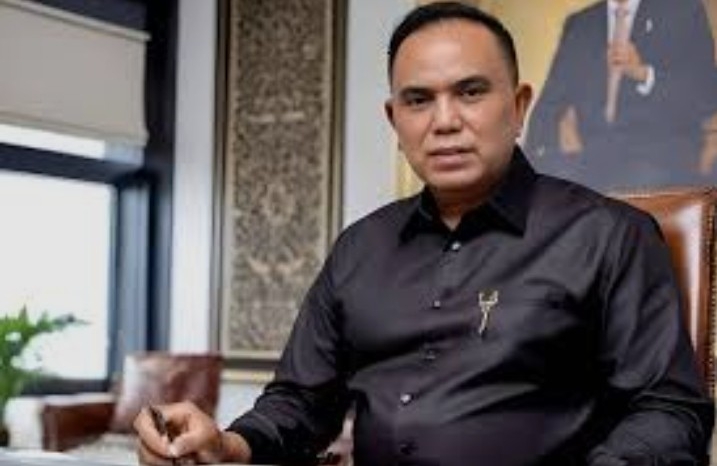
This is precisely why Iran stands as a vital geopolitical lesson for Indonesia. For decades, Iran has endured U.S. pressure, sanctions, financial restrictions, diplomatic isolation, military threats, and open conflict — yet Tehran has preserved the space to determine its own strategic direction. Iran has built domestic defense and technological capabilities, expanded ties with non-Western powers, and leveraged its geographic position to strengthen its bargaining power. Against this backdrop, Ir. R. Haidar Alwi, MT — President of Haidar Alwi Care and the Haidar Alwi Institute, and Advisor to the ITB Alumni Association — argues that Indonesia needs a new mindset: not a mentality of seeking protection from great powers, but one of building strength of its own. The world does not bestow sovereignty as a gift. Sovereignty is won and maintained through national capacity.
“A strong nation does not live by asking permission from others to determine its own future. Indonesia may be friends with anyone, but decisions regarding Indonesia’s national interests remain in the hands of the Indonesian people themselves,” Haidar Alwi said.
This statement offers a starting point for understanding why Iran’s experience matters far beyond debates over whether one likes or dislikes the country. Iran demonstrates that standing firm against pressure requires more than rhetoric. A nation must build capacity so that external pressure does not automatically translate into control over domestic decision-making. Here, the strategic legacy of Ali Khamenei deserves close examination.
Iran: Where Sovereignty Is Not Negotiated with Washington
For decades, Iran has upheld one consistent principle: relations with great powers may shift, but national interests must never be surrendered wholesale to them. The United States possesses immense economic, financial, technological, and military might — yet that pressure has not stopped Iran from building national capacity. Iran has developed its defense industry, missile and drone technology, domestic manufacturing, trade networks, and strategic partnerships with nations including China and Russia. Even intensifying economic pressure through 2026 has not erased Iran’s ability to play its geopolitical cards. As the U.S. escalated financial pressure on Tehran through new sanctions, Iran has continued pursuing alternative trade routes and economic partnerships. This is what distinguishes a nation that is merely large geographically from one that strives for strategic autonomy.
Ali Khamenei emerged as one of the most decisive figures in this journey. Over three decades as Iran’s Supreme Leader, he anchored national independence, resistance to foreign domination, and domestic strength-building as core tenets of the Islamic Republic’s strategy. Khamenei passed away on February 28, 2026, following a U.S.-Israeli strike; Mojtaba Khamenei was subsequently appointed Supreme Leader in March 2026. Yet the leadership transition does not diminish the enduring relevance of Ali Khamenei’s strategic legacy. On the contrary, Iran’s long trajectory shows how the idea of sovereignty can shape a nation’s strategic orientation for decades.
“For me, Ali Khamenei’s most important legacy is not merely his courage in speaking out against the United States. What matters more is his conviction that a nation seeking respect must stand on its own strength. Indonesia can learn that lesson without losing its own identity and path,” Haidar Alwi stated.
It follows that Iran’s strength is not purely military. Defense, technology, diplomacy, economics, energy, and geography are woven together into instruments of leverage. And when speaking of Iran’s geography, we arrive at its most powerful strategic asset: the Strait of Hormuz.
Hormuz: Geography That Forces the World to Take Iran Seriously
The Strait of Hormuz proves that geography becomes power when a nation understands its strategic value. The strait is one of the world’s most critical energy corridors; any serious escalation there impacts oil prices, shipping lanes, supply chains, and the global economy. Consequently, Iran’s position cannot be measured by economic size alone. Iran sits at a geographic crossroads where global energy interests intersect directly with its own national interests. In 2026, renewed U.S.-Iran tensions once again demonstrated how swiftly developments in the region ripple through global energy markets.
Indonesia possesses enormous geopolitical assets. It spans two oceans, commands key strategic straits, holds a vast domestic market, rich natural resources, and occupies a pivotal position in the Indo-Pacific. Yet these assets only become strength when managed by a nation with vision and capacity. Wealth exported as raw materials is not power. Trade routes unsupported by maritime capability are not power. A large population without mastery of technology is not power. Hence, the lesson of Hormuz for Indonesia is simple: geography becomes bargaining power only when a nation translates it into strategic capacity.
“Indonesia holds immense geopolitical cards. The question is not whether we have assets — but whether we are strong enough to turn them into leverage. Indonesia is no small nation. We simply need to stop thinking like one,” Haidar Alwi emphasized.
From Iran we learn the courage to defend strategic space. From its geography we learn that position can become power. But strategic endurance cannot exist without an economic and industrial foundation. This is where China offers the next vital lesson.
China: Turning Historical Wounds into Strength
China remembers its Century of Humiliation — including the Opium Wars and foreign encroachment — as a historical era when national weakness cost the nation the right to determine its own destiny. The lesson forged was simple: never be weak again. Following reforms in 1978, China built an economy, industry, infrastructure, education, technology, and state capacity on an extraordinary scale. The World Bank records that nearly 800 million people have escaped extreme poverty in just decades, while since 1978 its economy has averaged over 9% annual growth. These numbers underscore one truth: strategic sovereignty requires material strength.
“China shows that remembering history is not enough. Historical wounds can be transformed into energy to build an economy, industry, technology, and national power. Indonesia also has a long colonial past. The question is no longer who once colonized us — but whether we have built enough strength to avoid being dictated to by anyone,” Haidar Alwi noted.
Iran demonstrates courage in the face of geopolitical pressure. China shows how economic power and state capacity are built over the long term. Together, these experiences point to Indonesia’s own challenge: never allow a nation so rich in resources and strategic position to become merely a market, a raw-material supplier, a technology consumer, or a battleground for competing influences.
Indonesia: Never Become a Satellite of Any Power
Indonesia need not seek new enemies. It must build new strength. The United States may be a partner; China may be a partner; Iran, Russia, India, Europe, and others may all be partners. But none may become the sole arbiter of Indonesia’s direction. This is the true meaning of an independent and active foreign policy translated into 21st-century geopolitics: independence does not mean passivity, and being active does not mean becoming a follower of any bloc. Indonesia can engage with all sides from an increasingly equal footing — for national interest must never be bartered away for dependency.
Nations easily swayed from outside are rarely weakened by external pressure alone; they are undermined by internal vulnerabilities. Corruption, weak strategic industries, technological dependency, financial reliance, fragile energy and food security, and weak institutions — all narrow the space for sovereignty. Hence, building clean governance, a strong national industry, domestic technology, robust defense, quality education, and a value-added economy is not merely a development agenda. It is a sovereignty agenda.
“Indonesia need not be anti-American, anti-Chinese, or anti-anyone. What we must build is an Indonesia that cannot be easily coerced by anyone. When we are strong, we can be friends with the world without sacrificing our national interests,” Haidar Alwi said.
This is the essence of the new mindset Indonesia requires. We learn from Iran without becoming Iran. We learn from China without becoming China. We take their courage, strategic discipline, commitment to strength-building, and awareness of sovereignty — and adapt them to Pancasila, the Constitution, and Indonesia’s unique character. For the goal is not to seek a new patron, but to end the need for patrons entirely.
Indonesia cannot wait for the world to change first. It must transform its own capacity. When a nation boasts a strong economy, technology, defense, industry, diplomacy, human resources, and clean institutions — external pressure no longer easily translates into domestic control. Iraq and Libya taught how dearly a nation pays when it loses command of its own destiny. Iran showed what it means to defend strategic space amid U.S. pressure. China demonstrated how historical humiliation can fuel the construction of national power. Indonesia possesses the history, resources, people, geography, and market to draw wisdom from all of them.
“Ultimately, Indonesia’s choice is simple: become a nation that shapes its own history, or one whose history is decided by others. We are not building Indonesia to oppose the world. We are building Indonesia so the world respects us. When Indonesia is strong, we cooperate with anyone without bowing to anyone. When Indonesia is truly sovereign, friendship becomes a choice — not a necessity born of dependency. That is the Indonesia worthy of being bequeathed to the next generation,” Haidar Alwi concluded.