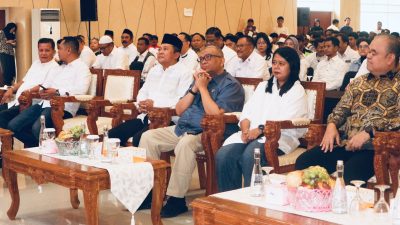


Jakarta – The Indonesian Electoral Studies Center (PUSKAPI) has urged the House of Representatives (DPR) to conduct a comprehensive review of the country’s electoral system. According to the research institution, the evaluation should be based on empirical evidence and Constitutional Court (MK) rulings, rather than short-term political interests.
PUSKAPI Executive Director Zaenal Abidin Riam emphasized that the direction of electoral reform must be clearly established from the outset.
“Regulatory changes must aim to strengthen popular sovereignty, rather than provide a means for political elites to secure their positions,” said Zaenal, who is also a public policy analyst.
Following its assessment, PUSKAPI identified four key areas requiring evaluation.
“First, reviewing the effectiveness of the open-list proportional representation system. Second, reorganizing electoral districts to reflect population figures. Third, ensuring a balanced and proportional allocation of parliamentary seats. Fourth, redesigning simultaneous elections, including their scheduling and technical implementation,” Zaenal explained.
Beyond these four areas of evaluation, PUSKAPI has outlined four objectives for electoral reform.
The first is to guarantee equal voting power among voters. The second is to improve the representation of women and historically underrepresented groups. The third is to strengthen the accountability of elected representatives to their constituents.
The fourth objective is to take into account the workload of election organizers and the quality of voters’ choices.
This concern highlights the challenges posed by simultaneous elections, in which election organizers are required to work under considerable time constraints and technical pressure, while voters must make decisions across multiple ballots within a limited period.
The issues of electoral district boundaries and parliamentary seat allocation touch on a fundamental question of representative democracy: whether one vote in a particular region carries the same weight as a vote in another.
“Without adjustments that reflect population dynamics, equal voting power will be difficult to achieve, and the quality of political representation will be at stake,” Zaenal stated.
PUSKAPI concluded by emphasizing that all proposed reforms should serve to strengthen popular sovereignty and contribute to the realization of a democratic and inclusive Indonesia.