
PRIME NEWS POST
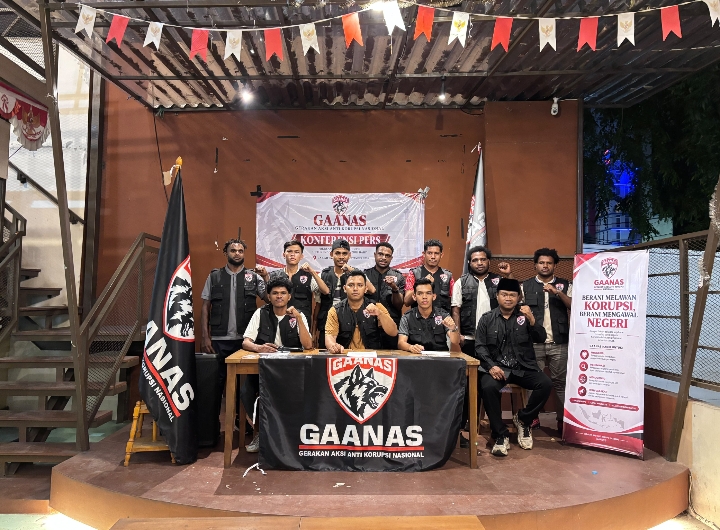
The INDONESIAN (Jakarta)— The National Anti-Corruption Action Movement (GAANAS) has issued a stern rebuke of the management of the Aceh Revenue and Expenditure Budget (APBA), specifically targeting the allocation of People’s Priorities (Pokir) funds within the Aceh House of Representatives (DPRA), reportedly valued at approximately Rp1 trillion.
GAANAS asserts that such a substantial allocation of public funds warrants rigorous oversight and investigation. The organization is urging law enforcement authorities to examine potential irregularities spanning planning, budgeting, procurement, and project implementation under the DPRA Pokir framework.
The call for accountability extends beyond Aceh — youth groups and civil society networks spanning from Aceh to Papua have united in demanding that the Corruption Eradication Commission (KPK) prioritize scrutiny of this budgetary governance.
Pokir and the Risks of Budget Hijacking
GAANAS characterizes the situation as a form of budget hijacking, where public resources risk being diverted from genuine development priorities and community needs toward particular political interests.
However, the organization emphasizes that these allegations must be verified through independent, evidence-based investigation.
“If Pokir allocations indeed reach Rp1 trillion, the public has a right to know how these funds were planned, who benefits, how procurement processes were conducted, and whether all expenditures align with Aceh’s development priorities,” stated Rifqi Maulana, GAANAS Spokesperson.
GAANAS urges the KPK to look beyond nominal figures and trace the entire chain of management — from proposal and approval through to project execution.
Amidst Ecological and Disaster Vulnerability
Rifqi highlighted that Aceh currently faces mounting environmental challenges and hydrometeorological disasters, including widespread flooding and landslides.
Under such conditions, he argues, regional budgets should be directed toward programs delivering direct impact: public safety, economic recovery, critical infrastructure, food security, and disaster mitigation. Consequently, any Pokir allocation lacking clear alignment with development priorities must be subject to open evaluation.
“The question is not whether Pokir may exist — but whether these public funds actually deliver measurable, tangible benefit to the people,” Rifqi noted.
Special Autonomy Funds Must Be Safeguarded
Rifqi further links budget governance concerns to the management of Aceh’s Special Autonomy (Otsus) Funds, which carry a strategic mandate to accelerate development, reduce inequality, and improve community welfare. All budgetary resources — including those channeled through Pokir — must be managed transparently, accountably, and measurably.
He emphasized that despite years of substantial fiscal transfers, Aceh has yet to see fully proportional improvements in living standards, making budgetary effectiveness an urgent priority.
Poverty and Budgetary Effectiveness
Rifqi also questioned whether Aceh’s substantial spending has translated into meaningful poverty reduction.
“When budgets are large yet poverty, inequality, and economic hardship persist, it is the effectiveness of policy and governance that must be examined,” he stated.
Rejecting Political Diversion Tactics
GAANAS warns against using regional identity or political sentiment to deflect scrutiny. Budgetary oversight, Rifqi asserts, is an act of public protection — not an attack on Aceh itself.
“Watching over public money is not opposing Aceh; transparency is how we protect Aceh and its people,” he affirmed.
Four-Point Demands
GAANAS has formally called upon state institutions to:
1. To the KPK, Attorney General’s Office, and National Police Criminal Investigation Unit: Investigate the allocation and realization of the approximately Rp1 trillion DPRA Pokir funds, including indications of project manipulation, conflicts of interest, or unlawful transactions.
2. To the Ministry of Home Affairs: Strengthen oversight to ensure Pokir programs conform to regional development plans and statutory budgeting frameworks.
3. To the Supreme Audit Board (BPK RI): Conduct a targeted performance audit should sufficient grounds exist to assess compliance and effectiveness.
4. To the Aceh Government and DPRA: Disclose full, transparent information on Pokir planning, locations, values, implementing parties, and project outcomes.
GAANAS clarifies these demands do not constitute a presumption of guilt — investigations are needed to establish facts.
“If processes are lawful, transparency and audit will prove it. If wrongdoing exists, law enforcement must act decisively — regardless of rank or political influence,” Rifqi concluded.
Reported from various media sources //photo from Google documents // contribution by Prime News Post international online media // news.paper