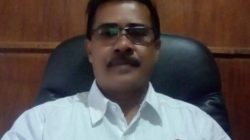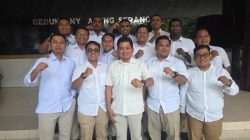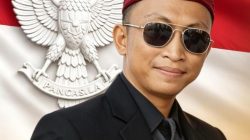

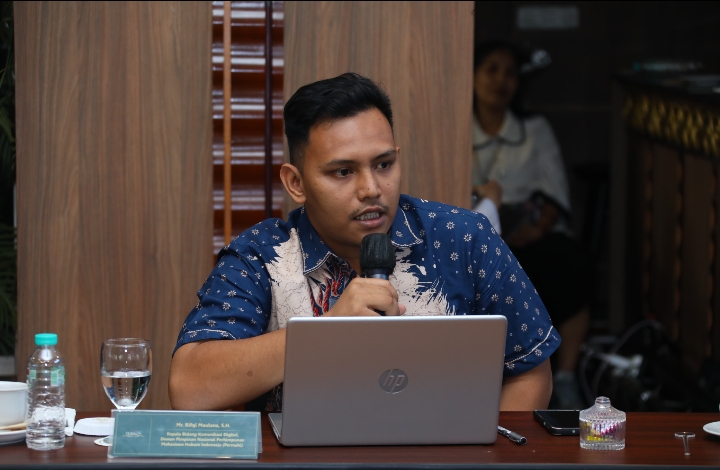
JAKARTA — Rifqi Maulana, S.H., Head of Digital Communications at the Indonesian Law Students Association (PERMAHI), underscored the critical role of public communication strategies in accelerating implementation of the Free Nutritious Meal Programme (MBG) in Indonesia’s Frontier, Outermost, and Disadvantaged (3T) regions.
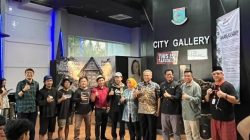
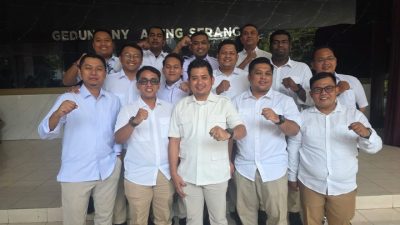
He delivered the remarks as a speaker at the Policy Discussion Forum titled “Strategies to Accelerate Implementation of the Free Nutritious Meal Programme (MBG) in Frontier, Outermost, and Disadvantaged (3T) Regions”, organised by the Domestic Policy Strategy Agency at Horison Ultima, Menteng, Jakarta, September 2026.
Bringing together government representatives, experts, practitioners, and academics, the forum heard that MBG success in 3T regions depends not only on food supply and distribution — but equally on building public understanding and participation.
According to Rifqi, MBG must be communicated as a policy with broader impact on health, education, human resource quality, and the future of Indonesia’s children.
“MBG is not merely free food. It is an investment in health, education, and the future of Indonesia’s children,” he stated.
He explained that the unique characteristics of 3T regions demand tailored communication approaches. Limited infrastructure, geography, internet access, and social diversity mean outreach cannot rely solely on social media or digital channels.
Rifqi therefore urged the government to strengthen community‑centred communication by engaging trusted local figures.
“The first step is to engage community leaders, village heads, religious scholars, customary elders, school principals, regional leadership forums, village governments, and respected figures whom the community trusts,” he said.
These stakeholders must receive full understanding of the programme’s objectives, benefits, mechanisms, and governance — enabling them to serve as a bridge between government and the public. Information must also be conveyed in simple, accessible language. Communities need clarity on how MBG addresses child nutrition, reduces malnutrition and stunting, and supports health and learning outcomes.
Beyond health and education, Rifqi noted the programme’s potential to drive local economic impact when supply chains include farmers, fisherfolk, livestock producers, and micro‑enterprises.
“When communities understand the benefits and see local economic involvement, support for MBG will grow from within,” he said.
Three‑Stage Communication Framework
Rifqi proposed a three‑phase approach to strengthen MBG outreach in 3T areas:
1. Build understanding among community leaders
2. Establish open dialogue with the public
3. Enable community oversight of implementation
“Once the first two stages are underway and shared understanding is achieved, implementation becomes far smoother. People grasp the value of MBG and know how to help monitor its delivery,” he explained.
Open dialogue is essential — communities need space to ask questions, voice concerns, and receive direct clarification. This also prevents misinformation from taking root.
“Not everyone in 3T regions is active on social media. Information must not stop at digital channels — it must reach the people it serves,” he stressed.
Strengthening Feedback and Complaint Channels
As PERMAHI’s Digital Communications Chief, Rifqi also highlighted the need for two‑way communication. Government must not only disseminate information — but create avenues for reporting, criticism, and input.
Complaint mechanisms need not depend on apps or social media. In low‑connectivity areas, village offices, schools, community health centres, dedicated posts, and public spaces can serve as information and feedback hubs.
“Understanding comes first. Once people know the programme, they must also know how to report, give feedback, and seek redress,” he said.
In connected areas, digital tools can enhance transparency and oversight. Rifqi outlined three pillars of public engagement: transparency, monitoring, and feedback.
– Transparency: Publish menus, beneficiary numbers, distribution schedules, and budget data via village notice boards, schools, community forums, and available digital platforms.
– Monitoring: Enable reporting through teachers, village heads, community volunteers, and complaint posts — flagging delays, quality concerns, or excluded beneficiaries.
– Feedback: Log every concern and suggestion, relay to programme managers, and act on findings through regular review.
“In 3T regions, transparency and participation do not require internet. What matters is open information, accessible channels, and real action,” he stated.
He called for complaint information to be displayed prominently at village offices, schools, markets, health facilities, and public gathering points. Regular community meetings should also be used to assess progress and gather input.
Rifqi affirmed that accelerating MBG in 3T regions requires partnership between government and communities — engaging customary, religious, and village leaders, schools, health workers, and beneficiary groups.
“When people understand the programme, see its benefits, and know how to monitor and report — they become more than beneficiaries. They become partners in MBG’s success,” he concluded.
Strategic Forum
Rifqi also commended Dr. TR. Fahsul Falah, Head of Regional, Demographic, and Public Service Policy Strategy, for convening the forum as a platform for exchange.
The event featured experts across sectors, including Lindsey Afsari Puteri (Executive Office of the President), Drs. Samsul Widodo (Ministry of Villages), Rufriyanto Maulana Yusuf (National Nutrition Agency), and senior officials from the Ministry of Home Affairs, Ministry of Finance, and independent research and enterprise.
Rifqi’s participation underscores PERMAHI’s commitment to public communication, civic engagement, and policy oversight — ensuring national strategic programmes are understood and embraced down to the nation’s most remote communities.
Reported from various media sources //photo from Google documents // contribution by Prime News Post international online media // news.paper