
PRIME NEWS POST
The INDONESIAN — The Central Executive Board (DPP) of the Indonesian Students and Youth Movement (GMPRI) has firmly expressed its full support for the West Nusa Tenggara (NTB) Provincial Government’s plan to continue the development of the Lembar–Kayangan bypass road, which is targeted to enter the construction phase in 2027.
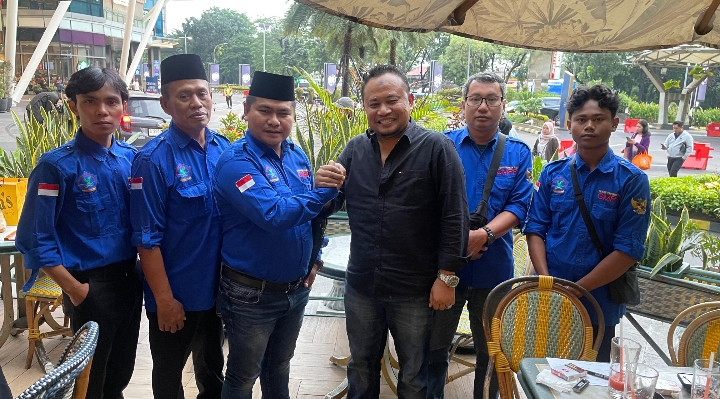
The statement was delivered directly by the Chairman of DPP GMPRI, Raja Agung Nusantara, who described the project as a strategic, progressive, and visionary step in accelerating infrastructure development and promoting equitable economic growth in NTB, particularly on Lombok Island.
“The development of the Lembar–Kayangan bypass road represents a concrete commitment by the regional government to strengthen interregional connectivity, streamline logistics distribution, and open new economic hubs. This is not merely a physical project, but a long-term investment for the welfare of the people of NTB,” he emphasized.
As previously reported, the NTB Provincial Government has confirmed the continuation of the project in 2026 after delays caused by budget constraints and the incomplete tender process for the Environmental Impact Assessment (Amdal) in the previous year. Currently, the project remains in the assessment phase through a feasibility study (FS), alongside the preparation of the Detailed Engineering Design (DED), completion of the environmental assessment, and land acquisition processes.
Acting Head of the NTB Public Works and Spatial Planning Agency (PUPR and Perkim), Budi Herman, stated that the technical team continues to conduct comprehensive studies on the project, which is estimated to require trillions of rupiah in funding. The selection of the Sengkol–Pringgabaya route has been carefully considered, particularly in supporting economic growth and alleviating traffic congestion along the main Mataram–East Lombok corridor.
Meanwhile, NTB Governor Dr. Lalu Muhamad Iqbal expressed optimism that the project will enter the construction phase in 2027, with the current year focused on completing all technical and administrative requirements.
In response, DPP GMPRI emphasized that the land acquisition scheme through consolidation or land endowment (wakaf) is an innovative breakthrough that deserves appreciation. However, it must be strictly monitored to ensure adherence to principles of transparency, fairness, and the protection of the rights of affected communities.
“We fully support this policy, but stress the importance of accountable and just implementation. The land consolidation scheme must genuinely provide added value and tangible benefits for the community, rather than creating new inequalities,” Raja Agung Nusantara added.
Support for the strategic project was also reinforced by DPP GMPRI Advisory Board member Iyuk Wahyudi, who also serves as Secretary General of the Indonesian CSR Forum. He highlighted the significant potential of the Lembar–Kayangan bypass in improving the investment climate and encouraging private sector involvement through corporate social responsibility (CSR) programs.
“This project holds great potential to foster synergy between the government, the private sector, and the community. We see strong opportunities to enhance the role of CSR in supporting sustainable development in NTB, particularly in empowering communities around the affected areas,” he said.
Furthermore, DPP GMPRI reaffirmed its commitment to act as a critical yet constructive strategic partner in overseeing the project, ensuring timely, targeted, and impactful implementation for public welfare.
The approximately 50-kilometer Lembar–Kayangan bypass is planned to traverse the southern corridor of Lombok Island, covering areas from Gerung, Praya, Sengkol, Keruak, and Labuhan Haji to Pringgabaya. The route is considered more logistically efficient and strategically important for supporting heavy vehicle mobility, thereby reducing traffic congestion on the existing main roads.
“This is an important momentum for NTB to leap forward. DPP GMPRI will continue to stand alongside the people and the government to ensure that this development is carried out with integrity, inclusiveness, and a strong orientation toward the common good,” Raja Agung Nusantara concluded.