
PRIME NEWS POST
The INDONESIAN (JAKARTA) — A magnitude‑7.7 earthquake struck Flores, East Nusa Tenggara (NTT), on Saturday, 15 August 2026. From the morning of the disaster, President Prabowo Subianto instructed the government to move swiftly to address its impact. Those directions were translated into action through the deployment of personnel, logistics, evacuation, medical services, and cross‑institutional coordination. Three days later, on Tuesday, 18 August 2026, National Police Chief (Kapolri) Gen. Pol. Listyo Sigit Prabowo traveled directly to NTT while the situation remained dynamic and thousands of aftershocks were still occurring.
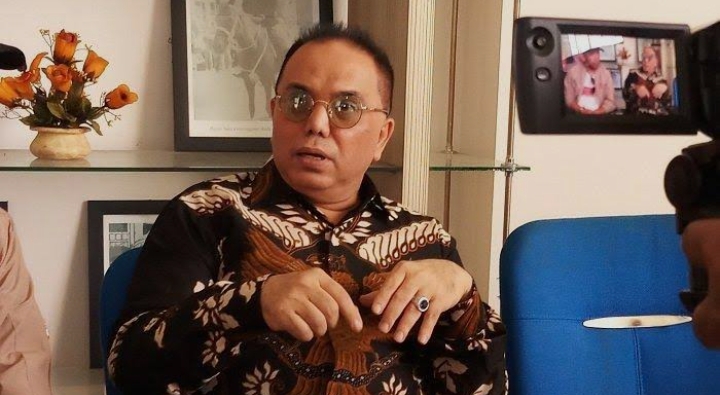
As of 18 August, 27,700 residents were reportedly still displaced across 107 shelter points in seven regencies, while Indonesia’s Meteorology, Climatology and Geophysics Agency (BMKG) recorded 2,119 aftershocks through the morning. According to Ir. R. Haidar Alwi, MT — President of Haidar Alwi Care and Haidar Alwi Institute, as well as Advisory Board Chairman of the ITB Alumni Association — this sequence demonstrates that the President’s directives to government bodies, including the National Police (Polri), have been translated into a tangible state presence among the people.
“When the President issues a directive in an emergency, its success is measured not only by how quickly the order is conveyed, but by how swiftly it becomes action that saves and serves the people. The Kapolri’s presence in NTT shows that trust in Polri is being translated into real work,” Haidar Alwi stated.
The Kapolri’s visit alongside House of Representatives Commission IV Chairwoman Siti Hediati Hariyadi, known as Titiek Soeharto, therefore carries broader significance beyond a mere field inspection. It reflects a government mandate being carried out, an oversight function in action, and state leaders seeing the people’s needs firsthand.
Presidential Directions Translated into Field Leadership; Polri Brings the State to the Crisis
President Prabowo issued instructions on the morning of 15 August 2026 for the government to act quickly. The central government consolidated the National Disaster Management Agency (BNPB), National Search and Rescue Agency (Basarnas), relevant ministries, local governments, the TNI (armed forces), Polri, and state‑owned enterprises. An initial 27 tons of logistics were dispatched, followed by an additional 25 tons, bringing reported central government aid to 52 tons by 16 August.
Throughout the response, Polri performed strategic functions within its mandate: search‑and‑rescue support, evacuation, security, health services, casualty data collection, aid distribution, and psychosocial assistance. The Kapolri deployed directly on 18 August to ensure these capabilities were operational on the ground.
Kapolri Listyo Sigit and Titiek Soeharto assessed displacement sites in Manggarai and East Manggarai Regencies, including the Barang Kolong Post and the Lamba Leda area. They spoke with displaced residents, reviewed facilities, clean water and sanitation needs, handed over aid, and paid special attention to children in shelters.
Titiek Soeharto’s presence as Commission IV Chair exercised the legislature’s representative and oversight roles, while the Kapolri ensured Polri’s operational support was functioning. Their roles differed, but both served the same purpose: ensuring affected communities received the state’s attention and service.
Polri deployed 236 personnel under the operational command (BKO) to the NTT Regional Police, bringing SAR, K‑9, Disaster Victim Identification (DVI), medical, and operational capabilities. Eight disaster response posts were established — one main post in Labuan Bajo and seven tactical posts. Polri’s total logistics assistance reached 247.66 tons: 19.59 tons from Police Headquarters and 228.07 tons from five regional police forces.
This effort shows a clear continuity: the President sets direction, the Kapolri mobilizes the institution, police personnel work on the ground, and the people are the ultimate purpose of every deployment.
Public Trust as Social Capital for Polri’s Leadership and Progress
Polri’s performance in the NTT earthquake response is particularly meaningful when viewed alongside public confidence. A Haidar Alwi Institute survey conducted March–April 2026 recorded an 87.3 percent public trust rating in Polri. That figure represents both substantial social capital and a profound responsibility — to continually uphold professionalism, service, and closeness to the community.
Public trust is not a blank check. The higher the people’s confidence, the greater the responsibility for Polri to prove it through tangible results. In NTT, that 87.3 percent meets the reality of tens of thousands of people needing the state’s presence.
Haidar Alwi has previously offered a strong assessment of Gen. Listyo Sigit Prabowo’s leadership. On 5 May 2025, the Haidar Alwi Institute named Listyo Sigit the best Kapolri in history per the institute’s evaluation, citing security stability, public service, law enforcement, case resolution, and institutional progress — an assessment made long before the NTT earthquake. The Flores event is not the origin of that view, but further illustrates the Kapolri’s leadership in fulfilling the force’s protective and service functions.
In Haidar Alwi’s view, leadership is measured not only by maintaining security and upholding the law, but by the ability to mobilize all institutional resources when the people face an emergency. Speed, coordination, decisiveness, and direct presence are essential marks of that leadership.
“The people’s trust in Polri must be answered with ever‑better performance. Likewise, the President’s trust in the Kapolri must translate into institutional readiness to stand with the people in their hour of need. Polri is not merely a security force — it is the state’s power to protect and serve society,” Haidar Alwi said.
The NTT response therefore cannot be judged by aid volumes or official visits alone. The critical measure is whether the state ensures assistance reaches communities, shelters remain safe, basic needs are met, and recovery moves forward.
Concrete Action in NTT Reinforces Trust in Polri and Confidence in the State
The response to the Flores earthquake demonstrates that state institutions are strongest when people are at their most vulnerable. Even amid ongoing aftershocks and mass displacement, Polri deployed personnel, posts, logistics, assets, and specialized capabilities — with public safety as its foremost priority.
Challenges remain in access and distribution to certain areas. Yet those challenges underscore that disaster response demands constant adaptation and a commitment to finding ways to deliver aid. Optimism does not come from claiming all problems are solved, but from seeing the state capable of moving, collaborating, and improving.
For Haidar Alwi, supporting Polri means acknowledging work already done while urging the institution toward greater professionalism, humanity, and responsiveness. President Prabowo’s directives from the outset, the deployment of police resources, the Kapolri’s visit alongside Titiek Soeharto, and the logistical and personnel support all reflect alignment between government policy and on‑the‑ground action.
The President’s trust finds tangible form through the mandate being carried out. Public trust finds proof through services directly experienced. And the joint effort of the government, TNI, Polri, BNPB, Basarnas, the legislature, and local authorities shows that Indonesia’s strength lies in the ability of all state elements to act in the people’s interest.
“A strong nation is one that can turn directions into action, action into protection, and protection into hope for its people. In NTT, the President set the course, the Kapolri mobilized Polri, and police personnel stood alongside all state elements to assist communities. This is the optimism we must uphold: Indonesia can face disaster, Polri can stand with the people, and trust in state institutions can grow through real work,” Haidar Alwi concluded.
Reported from various media sources //photo from Google documents // contribution by Prime News Post international online media // news.paper