
PRIME NEWS POST
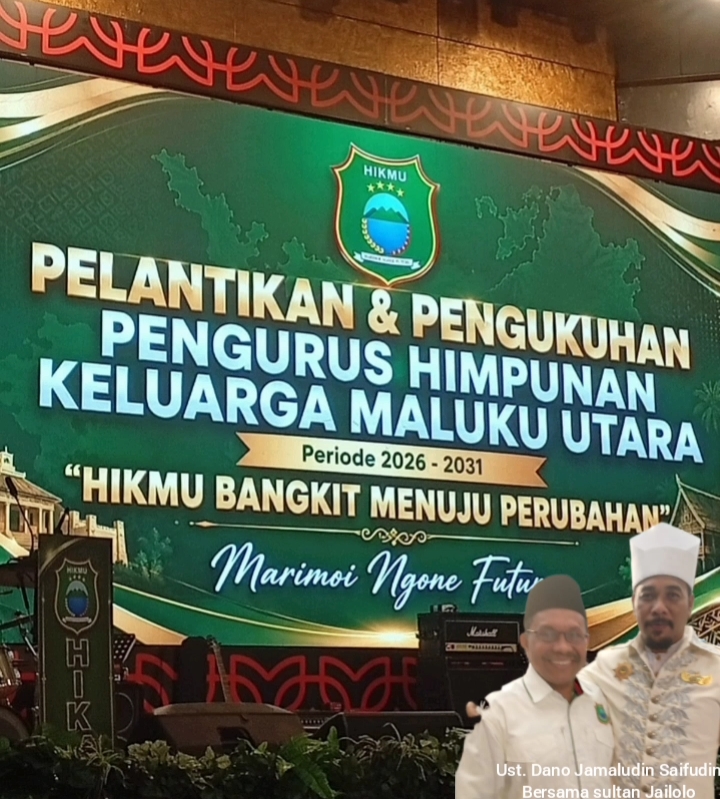
The INDONESIAN, (Jakarta)— The inauguration of the 2026–2031 leadership board of the North Maluku Family Association (Himpunan Keluarga Maluku Utara / HIKMU), held at the BRIN Building Auditorium in Central Jakarta on Saturday (22/8/2026), marked a pivotal moment of consolidation lfor the North Maluku migrant community.
Under the theme “HIKMU Rises Toward Change” and the spirit of “Marimoi Ngone Futuru” (“Let Us Move Forward Together”), the event, which began at approximately 09:30 WIB, featured not only the formal inauguration of the new leadership but also a vibrant North Maluku Arts and Cultural Performance.
According to the organizers, the event was attended by the Minister of Culture of the Republic of Indonesia, Dr. Fadli Zon, S.S., M.Sc., alongside various segments of the North Maluku community — community leaders, customary figures, religious leaders, academics, businesspeople, youth, and university students.
The inauguration officially ushered in the new leadership term of HIKMU under H. Askan Naim, S.Sos., M.H., for the 2026–2031 period.
This moment was viewed not merely as a leadership transition, but as an opportunity to reaffirm HIKMU’s identity as the great house of brotherhood for the North Maluku community, while expanding its role into a house of service for the people and their homeland.
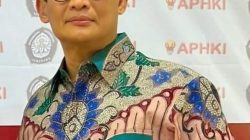
This perspective was delivered by Ust. Dano Jamaludin Saifudin, an observer of Irfani Sufism of Nationality from the Lentera Nurullah Community, in a national reflection titled “HIKMU Rises Toward Change: From a House of Brotherhood to a House of Service.”
According to Ust. Dano, leadership transitions should never be interpreted merely as the transfer of positions or changes in organizational structure.
“What is being passed on is not merely the organizational structure, but a trust that is continued, a history that is carried forward, and a brotherhood that must be safeguarded,” Ust. Dano stated.
HIKMU Is More Than a Migrant Organization
Ust. Dano argued that HIKMU’s existence carries broader significance than just being a social organization for the North Maluku migrant community.
HIKMU can serve as a space that brings together people from diverse backgrounds across North Maluku — from Ternate, Tidore, Bacan, Jailolo, and various other communities — within a single consciousness of brotherhood.
The spirits of “torang samua basudara” (“we are all family”) and “Marimoi Ngone Futuru” were highlighted as vital social capital for building an inclusive, welfare-oriented organization.
“Marimoi Ngone Futuru is not just a slogan. It is an ethic: that progress only carries meaning when it is shared together, without leaving anyone behind,” he said.
According to him, HIKMU will grow not because its members compete to appear the most prominent, but when more and more North Maluku people feel they have a home within it.
From a House of Brotherhood to a House of Service
Ust. Dano urged that the theme “HIKMU Rises Toward Change” be translated into tangible transformation.
Such change should not only concern organizational structures, but also the quality of service delivered.
HIKMU, he said, must become a home where young people find mentors, university students gain guidance, businesspeople build networks, communities find empowerment spaces, and North Maluku culture continues to thrive and be passed down.
“There is no need to be the loudest organization. It is enough to be the organization whose benefits are most deeply felt,” he said.
Organizations are remembered not for how high a stage they once occupied, but for how much benefit they brought to society, he added.
Arts and Cultural Performance Strengthens North Maluku Identity
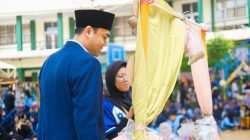
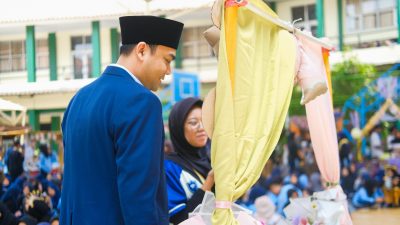
Beyond the inauguration ceremony, the North Maluku Arts and Cultural Performance stood as a key segment of the event.
A diverse array of performing arts, traditions, music, dance, and local wisdom from North Maluku was showcased as part of efforts to introduce and strengthen regional cultural identity among the migrant community.
The inclusion of arts and culture in HIKMU’s agenda demonstrates that migrant organizations serve not only social and fellowship functions but also act as strategic spaces for preserving cultural heritage so it remains alive and known to younger generations.
In this context, the presence of Indonesia’s Minister of Culture carried heightened relevance, as culture holds a vital position in strengthening both identity and national unity.
According to the organizers, the Minister of Culture expressed appreciation for the role of community organizations in safeguarding regional cultural identity.
“HIKMU is not merely a migrant organization — it is a house of brotherhood, a guardian of identity, and a force to bring North Maluku toward greater progress,” the Minister stated.
This framing positions culture not merely as a relic of the past, but as a social force that strengthens intergenerational bonds while reinforcing the North Maluku community’s contribution to Indonesia.
Ust. Dano viewed cultural preservation as an essential part of the generational trust. Young North Maluku people, he said, should not merely be given positions within the organization — they must be given spaces to know, understand, develop, and continue the legacy of their ancestors.
“The elders provide the roots; the young grow the leaves. A tree that loses its roots will fall, but a tree that grows no leaves will lose its future,” he said.
Therefore, HIKMU is expected to serve as a bridge between the senior generation’s experience and the younger generation’s creativity. Culture should not only be displayed in performances but become part of daily life, education, the creative economy, the arts, literacy, and character formation for future generations.
Leadership as a Trust, Not Power
From the perspective of Irfani Sufism, Ust. Dano reminded attendees that organizational positions are not symbols of power — they are trusts (amanah).
He cited QS. An-Nisa verse 58, concerning God Almighty’s command to deliver trusts to those entitled to them and to uphold justice.
“Amanah is not a crown. Amanah is accountability,” he emphasized.
Accordingly, the 2026–2031 HIKMU leadership is expected to prioritize humility, openness, deliberation (musyawarah), verification (tabayyun), and a spirit of service.
Differences Should Not Erase Brotherhood
Ust. Dano also reminded that a healthy organization is not one that lacks differences.
Rather, a mature organization is one capable of managing differences without losing brotherhood.
“Deliberation may grow heated, but brotherhood must not catch fire,” he said.
Criticism should not be instantly regarded as hostility, nor should differing views become grounds to exclude someone. Verification (tabayyun) must become culture, etiquette (adab) its boundary, deliberation the path, and brotherhood the goal.
From Jakarta for North Maluku
HIKMU’s presence in Jakarta was also noted as strategically significant, given Jakarta’s role as a national center of governance, policy, education, business, media, research, and networks.
Accordingly, the North Maluku migrant community is expected to serve as a healthy bridge between the national center and their home region.
“The question is not merely what Jakarta can give to North Maluku, but how North Maluku can become a subject of development — not merely an object of development,” Ust. Dano said.
He emphasized that North Maluku’s rich natural resources must be accompanied by improvements in human resource quality, environmental protection, equitable economic benefits, and respect for local communities and culture.
The 2026–2031 HIKMU leadership is expected to expand social contributions while building inter-regional networks.
Potential agendas include scholarships for North Maluku children, student mentorship, MSME empowerment, professional networks, a North Maluku data and research center, research-based policy advocacy, language and cultural preservation, indigenous community empowerment, diaspora economic networks, and development cooperation between migrants and their home regions.
In doing so, HIKMU answers not only the question “who are we?” but a more important one: “what can we do for others?”
Inauguration Is Not the End, But the Beginning of Service
Ust. Dano affirmed that the ceremonial inauguration will eventually conclude. The stage will be dismantled, banners taken down, cameras turned off, and guests return home.
Yet it is precisely after all that ends that the new trust truly begins.
“The measure of a leadership’s success is not when standing on stage, but when returning to the community and delivering benefits,” he said.
Therefore, HIKMU is expected to be strong not only in structure but in impact.
The new leadership under H. Askan Naim is poised to guide HIKMU toward becoming an increasingly inclusive, professional, culturally rooted, and integrity-driven organization capable of addressing the North Maluku community’s evolving needs.
Safeguarding the Great House of North Maluku
Ultimately, HIKMU is more than a name or an acronym.
Within it lies the long history of the North Maluku migrant community, longing for their ancestral land, culture, language, customs, and the aspiration to continue contributing to their region and nation.
Therefore, Ust. Dano expressed hope that HIKMU will never lose its roots as it enters this new chapter.
“HIKMU may grow, may change, and may become increasingly professional. But never lose your roots. HIKMU’s roots are brotherhood, culture, service, justice, knowledge, and piety to Allah SWT,” he said.
He expressed hope that the theme “HIKMU Rises Toward Change” will not remain merely an inauguration theme, but become a tangible movement.
“May the new leadership not merely administer an organization, but serve a historical trust. May the change we champion be not a change of structure, but a change in the quality of service,” he said.
This spirit converges on a shared message: inviting the entire North Maluku family, wherever they are, to safeguard brotherhood, nurture culture, and together build their homeland.
“We are one blood, one culture, one goal: to build our homeland and advance our brotherhood.”
With the spirits of “HIKMU Rises Toward Change” and “Marimoi Ngone Futuru,” the inauguration of the 2026–2031 HIKMU leadership is poised to mark the beginning of a new chapter in the North Maluku migrant community’s journey — from a house of brotherhood to a house of service, from guarding identity to strengthening contribution, and from gathering together to moving and progressing together.
Marimoi Ngone Futuru.
Together We Advance, Together We Safeguard North Maluku, Together We Contribute to Indonesia.
Editor’s Note: The reflection delivered by Ust. Dano Jamaludin Saifudin in this release represents a personal national and spiritual perspective within the context of HIKMU’s 2026–2031 inauguration. It does not constitute an official statement of the HIKMU organization and is not intended as an assessment of any individual or group.