
PRIME NEWS POST
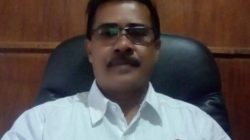
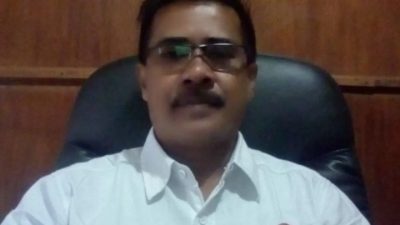
The INDONESIAN (Jakarta)— A youth leader from Sulawesi has issued sharp criticism of the government’s policy direction in addressing the potential global energy crisis, particularly regarding proposals to improve efficiency through restricting public activities and implementing remote learning.
He emphasized that the country should not rely solely on normative policies, but also prepare strategic and tactical measures to address worst-case scenarios—including a major crisis that could paralyze public mobility.
“At minimum, government policies must be designed to handle the worst possible situation. If a major crisis occurs, people must still be able to move around, even if it’s by small means,” he stated.
In his view, confining people to their homes during a crisis is not a solution; instead, it increases the risk of social and economic stagnation. He warned that without mobility, people would lose access to basic activities.
“Staying at home is the same as waiting for conditions to worsen. People can’t go anywhere, activities come to a halt, and social risks rise,” he stressed.
He also highlighted the remote learning policy, which he described as a quick-fix solution with potential long-term impacts. Besides reducing learning quality, the policy is deemed to weaken microeconomic circulation.
“If everything goes remote, the economy could grind to a halt. No movement means no small-scale transactions, and people will face greater hardship,” he said.
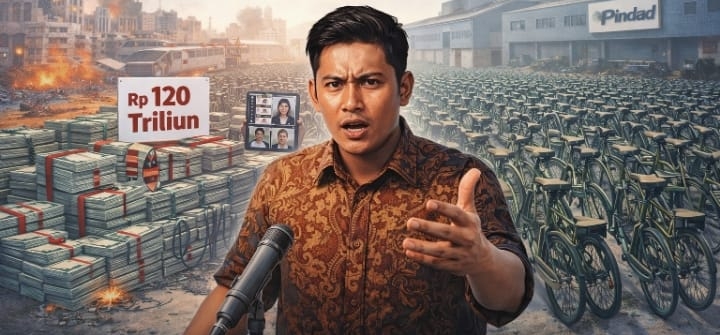
Against this backdrop, he put forward an alternative idea that he considers more rational and far-reaching: redirecting the Rp120 trillion budget for the 100-day Free Nutritious Meal Program (MBG) to invest in producing 100 million high-quality domestic bicycles through PT Pindad.
He explained that with an estimated production cost of around Rp1.2 million per unit, the budget would be sufficient to provide bicycles for all school-aged children in Indonesia, with a lifespan of 5–10 years and no reliance on fuel or electricity.
“This is not just about energy conservation—it’s about budget decisions. Rp120 trillion can become a long-term national asset, rather than being spent in just 100 days,” he clarified.
According to him, involving PT Pindad would ensure production quality, given the company’s experience in the national defense industry which demands high durability standards.
He argued that sturdy, long-lasting bicycles are highly relevant to Indonesia’s geographical conditions, while also serving as a symbol of national industrial independence.
Furthermore, he noted that large-scale production could be carried out through a parallel system involving thousands of production units across Indonesia, including small and medium-sized enterprises. This model would not only accelerate production but also create massive employment opportunities.
With global collaboration from countries with strong manufacturing capabilities, the production target is deemed achievable in a short time—even less than a month.
He emphasized that the program would not only address student mobility issues but also deliver wide-ranging benefits for health, the economy, and national energy resilience.
“Children can still attend in-person classes, stay healthy through physical activity, avoid dependence on fuel, and domestic industry will grow as well,” he said.
He also pointed out that in world history, bicycles have served as primary mobility tools during wars and crises, proving that simple solutions can be highly effective in extreme conditions.
“No fuel, no electricity—just human power. This has been proven throughout history. It means we actually have a real solution,” he stated.
In closing his remarks, he stressed that energy efficiency should not be used as a reason to sacrifice people’s basic rights, especially education.
“Efficiency does not mean restriction—it means choosing the most rational solution. We have the resources and the industry. All we need is the courage to make a decision,” he concluded.
He ended on a reflective yet challenging note.
“Whether this is rational or just a dream, let experts be the judges. But this nation must not stop seeking real solutions,” he said.
(Bar.S/ Ed)