
PRIME NEWS POST
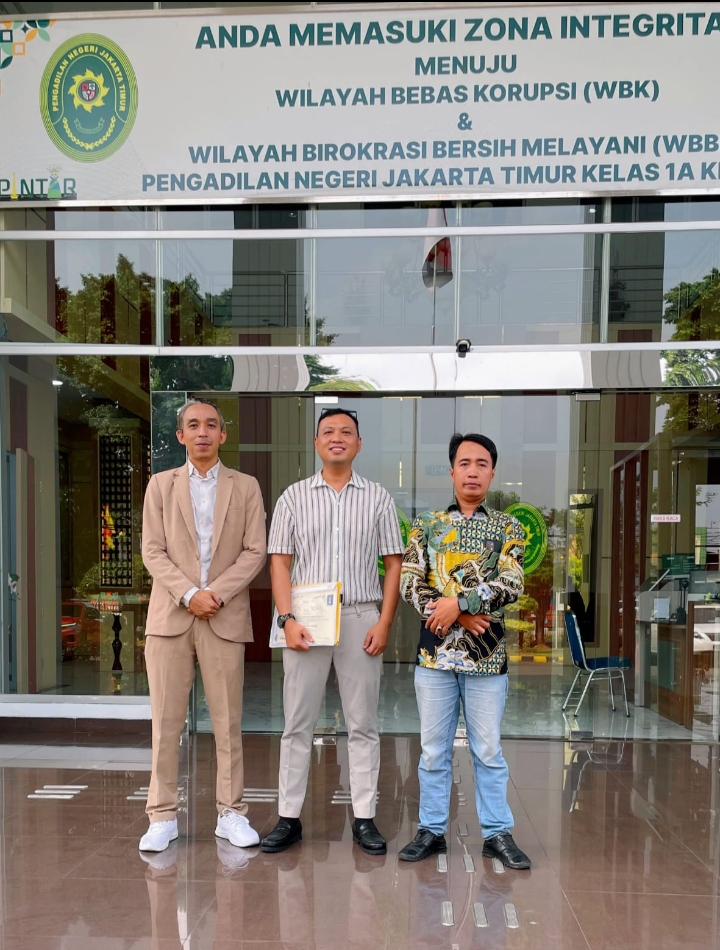
The INDONESIAN, (Jakarta)— Public debate over the implementation of rulings handed down by the Constitutional Court (MK) has resurfaced. Otto Hasibuan — Chairman of the Central Board of the Indonesian Advocates Association (DPN PERADI) and concurrently Deputy Coordinating Minister for Legal Affairs, Human Rights, Immigration, and Corrections — has been named in a civil lawsuit filed at the East Jakarta District Court on allegations of unlawful conduct.
The action was brought by Bayu Anugerah, S.H., M.H., a legal practitioner from Jambi, represented by counsel from the law firm Irfan Maulana & Partners. Also listed as a defendant in the case is the President of the Republic of Indonesia, cited on grounds of constitutional responsibility to oversee the conduct of state officials within the executive branch.
According to the plaintiff, the suit stems from an apparent conflict between Otto Hasibuan’s dual standing as a state official and provisions laid out in Constitutional Court rulings governing leadership within the advocates’ professional body.
Two landmark decisions form the legal backbone of the claim: Constitutional Court Decision No. 91/PUU‑XX/2022, which sets term‑limit rules for leaders of the advocates’ association; and Constitutional Court Decision No. 183/PUU‑XXII/2024, interpreted here as regulating the status of association leaders who concurrently hold state office.
Bayu Anugerah stressed the filing is not aimed at individuals personally, but serves as a test case to measure whether Constitutional Court rulings are consistently enforced — a core requirement under Indonesia’s rule‑of‑law framework.
“The central issue is whether all parties — state officials and professional bodies alike — respect and give effect to Constitutional Court rulings, which are final and legally binding,” he stated.
The plaintiff asks the court to determine whether the defendants’ actions or omissions constitute unlawful conduct, and to order whatever legal measures are deemed necessary to secure effective implementation of the relevant Constitutional Court judgments.
The case is expected to draw close attention from legal circles, scholars, and the wider public, as it touches on pivotal matters: the institutional independence of the advocates’ profession, boundaries between professional representation and public office, and the practical enforceability of Constitutional Court jurisprudence within the state system.
Beyond the merits of the specific dispute, proceedings are widely seen as an opportunity to clarify legal standards and subject competing legal interpretations to rigorous judicial scrutiny. The resulting ruling could also become a significant reference point in strengthening constitutional culture and upholding the supremacy of law in Indonesia.
Reported from various media sources //photo from Google documents // contribution by Prime News Post international online media // news.paper
Related News