
PRIME NEWS POST
The INDONESIAN (Jakarta) — The National Leadership Council of the Indonesian Law Students Association (DPN PERMAHI) is urging the central government to establish a space for constructive and fair dialogue regarding the development plan for the Tangkulo Field within the South Andaman Working Area (WK). The aspiration of the Aceh Provincial Government to process gas through onshore facilities located in the Arun Special Economic Zone (SEZ) is viewed as a strategic step to ensure natural resources deliver optimal benefits for the local community.
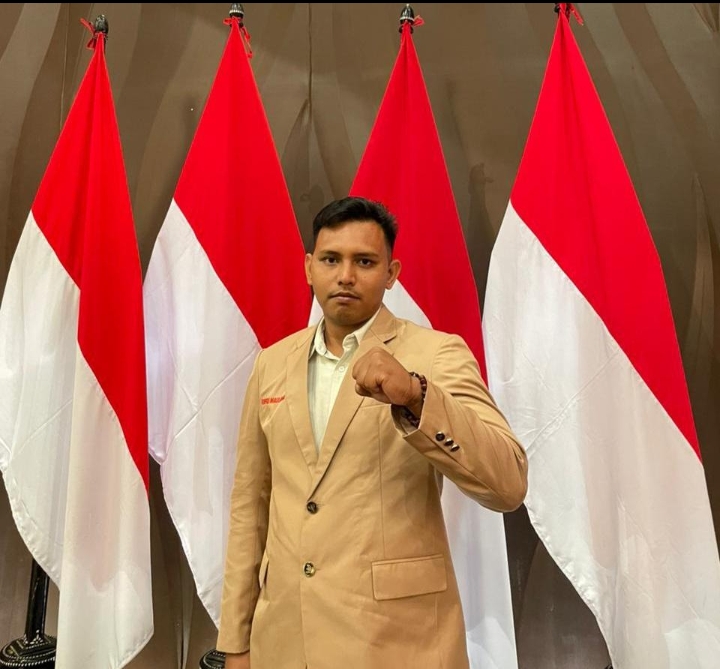
Rifqi Maulana, S.H., an official of DPN PERMAHI, emphasized that the letter submitted by the Governor of Aceh, Muzakir Manaf (Mualem), to the Minister of Energy and Mineral Resources (ESDM), Bahlil Lahadalia, deserves serious consideration in the national energy policy-making process.
According to Rifqi, managing the vast gas reserves in the South Andaman Working Area involves more than just technical aspects and investment; it also relates to the direction of long-term regional economic development. With reserve potential estimated at over 8 trillion cubic feet (TCF), South Andaman has the capacity to become a driving force for new industrialization in Aceh.
“The Aceh Provincial Government is advocating that this strategic resource should not remain at the production stage alone, but should be able to create added value through downstream industries, job creation, strengthened investment, and sustainable economic growth in the region,” Rifqi stated in Jakarta.
He noted that the existing energy infrastructure in the Arun SEZ represents a strategic advantage that must not be overlooked. Processing gas via onshore facilities is believed to revitalize Aceh’s industrial zone while attracting new investment in the petrochemical sector and other related downstream industries.
“Arun SEZ has a long history as a national energy hub. The infrastructure currently available is a valuable asset that must be utilized to strengthen Aceh’s economic competitiveness and genuinely improve community welfare,” he said.
Rifqi reminded that past experiences serve as an important lesson, ensuring that resource-rich regions are not merely sites for natural resource extraction without receiving proportionate economic benefits. Therefore, the principle of development equity must form the foundation of every national oil and gas management policy.
From the perspective of fair natural resource governance, he continued, producing regions hold a legitimate interest in gaining proportional benefits from their natural wealth. Consequently, the Aceh Government’s aspiration to establish its territory as a gas processing hub is seen as having a strong basis, both economically and within the framework of balanced national development.
DPN PERMAHI also commended the commitment of ESDM Minister Bahlil Lahadalia, who has consistently emphasized the importance of involving regional stakeholders and local businesses in strategic national energy projects. According to Rifqi, this vision must be concretely realized in the development of the South Andaman Working Area, so that the people of Aceh become an integral part of the developing oil and gas industry value chain.
“Future energy management cannot be oriented solely toward increasing national production. What matters more is how these resources can create new centers of economic growth, expand employment opportunities, and bring prosperity that is directly felt by local communities,” he asserted.
Rifqi added that debates regarding gas processing schemes should fundamentally be viewed from a broader perspective—namely, balancing the development interests of Aceh alongside national interests.
“This is not merely a technical choice between floating and onshore facilities. At stake is the future of Aceh’s industrialization. Therefore, an open and objective dialogue is required, so that the decisions made can accommodate investment needs while ensuring the greatest possible economic benefits for the people of Aceh,” he explained.
DPN PERMAHI hopes that the central government, the Aceh Provincial Government, SKK Migas, BPMA, and all relevant stakeholders can build a shared understanding to determine the most beneficial development model for South Andaman, for the good of both the nation and the region.
“South Andaman gas must become a momentum for Aceh’s economic revival. Its management must foster industrialization, create jobs, strengthen regional economic independence, and serve as a development legacy that future generations of Aceh can enjoy,” Rifqi concluded.
@Reported from various media sources //photo from Google documents // contribution by Prime News Post international online media // news.paper
Related News