
PRIME NEWS POST
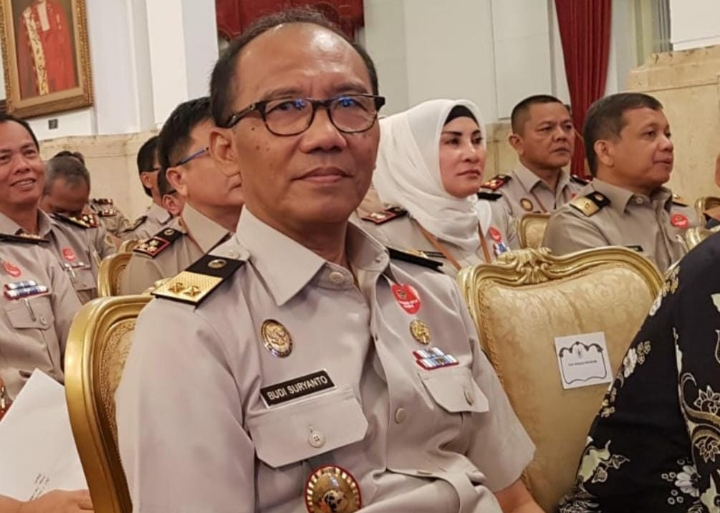
JAKARTA – Few figures in Indonesia focus deeply on both the practice and scholarship of agrarian and land affairs. One such expert is Dr. Budi Suryanto, SH, CN, MH, M.Si, a Senior Principal Lecturer at the Ministry of Agrarian Affairs and Spatial Planning / National Land Agency (ATR/BPN RI).
The senior civil servant emphasised that land forms the fundamental foundation of life, civilisation, and national development. “History shows that a nation’s progress is shaped largely by fair and sustainable agrarian governance,” Dr. Budi – as he is widely known – stated in an interview with senior journalist Gus Din in Jakarta on Saturday (4/7/2026).
“Indonesia’s agrarian management is anchored in Article 33 (3) of the 1945 Constitution and the 1960 Basic Agrarian Law. Agrarian and land governance reform holds the key to realising social justice, public welfare, national resilience, and our vision of Golden Indonesia 2045,” he said.
According to Dr. Budi, Indonesia requires a comprehensive National Diagnosis to fully grasp the scale of its land-related challenges. These include agrarian and land conflicts, unequal land ownership, overlapping permits and spatial plans, forest boundary disputes, conversion of agricultural land, fragmented data systems, and poor coordination between government bodies.
“Reform is essential to establish legal certainty, strengthen protection, improve governance, and support sustainable national development – so that every land-related challenge in Indonesia can be resolved effectively,” he noted.
Dr. Budi proposed a Grand National Agrarian Reform Strategy built around six core pillars:
1. Reform of spatial and textual land data
2. Regulatory review, agrarian information systems, legal harmonisation and certainty
3. Agrarian-based economic empowerment
4. Food security and environmental protection
5. Modernised, digitised public services
6. Fair resolution of agrarian conflicts
This will deliver services that are fast, simple, affordable, inclusive and transparent.
To achieve this, he outlined actionable steps:
– Establish accountable service administration
– Resolve all outstanding agrarian and land disputes
– Eradicate land crime and land mafia practices
– Implement modern agrarian reform
– Roll out the Single Map Policy
– Conduct a nationwide, holistic land census
– Digitise all spatial and textual land records
– Build a unified National Big Data platform
“This reform is framed as a national strategy to strengthen Indonesia’s development and resilience,” he affirmed. It also leverages technology to modernise land systems and position agrarian governance as a cornerstone of progress toward 2045.
“The implementation roadmap will be rolled out in gradual, measured and sustainable phases,” added Dr. Budi, a recipient of the Satyalencana Karya Satya Medal for 20 years of service (2010) and 30 years of service (2012), awarded directly by the President of Indonesia.
For communities and the nation, the reform will deliver:
– Stronger legal certainty and protection
– Enhanced food security
– Improved, accountable public services
– Higher living standards
– A healthier investment climate
– Reduced agrarian conflict
“National priorities include data integration, regulatory harmonisation, digital services, economic empowerment, and strengthened oversight with integrity-driven law enforcement,” said the scholar, who also holds a PhD in Law and international professional certification.
In closing, he stressed that agrarian reform is a national imperative to advance social justice, shared prosperity, food security, environmental stewardship and national sovereignty. “With transparent, professional and equitable governance, land will become the primary capital for national development.
“Agrarian reform serves the greatest good of the people and brings Golden Indonesia 2045 within reach. Our goal is to leave a comprehensive agrarian and land roadmap for future generations,” Dr. Budi concluded.
CURRICULUM VITAE
Dr. Budi Suryanto, SH, CN, MH, M.Si
Rank/Position: Senior Principal Lecturer (Rank IV/E), Ministry of Agrarian Affairs and Spatial Planning / National Land Agency (ATR/BPN RI)
Key Career Achievements:
1. 2008–2011: National 1st Place Award, Head of Magelang City Land Office
2. 2011–2013: National 2nd and 3rd Place Awards for timely, accountable delivery of national programmes, conferred by the Minister of Finance
3. 2014–2016: Two consecutive years ranked 1st and 2nd nationally for strategic programme delivery; resolved the 29-year-old Mandalika land conflict in West Nusa Tenggara (NTB); pioneered the village-by-village mass land certification scheme (precursor to PTSL) in NTB; formalised land rights for outer border islands adjacent to Australia while serving as NTB Regional Head of BPN
4. 2017–2018: Co-initiated the PTSL systematic mass land certification programme, earning a special promotion while serving as Director of Land Registration at ATR/BPN
Reported from various media sources //photo from Google documents // contribution by Prime News Post international online media // news.paper
Related News//Writer/Editor: Gus Din