
PRIME NEWS POST
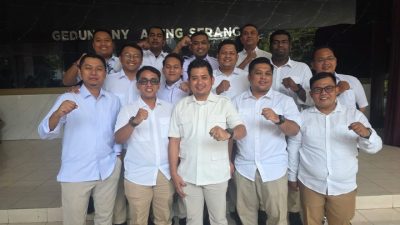
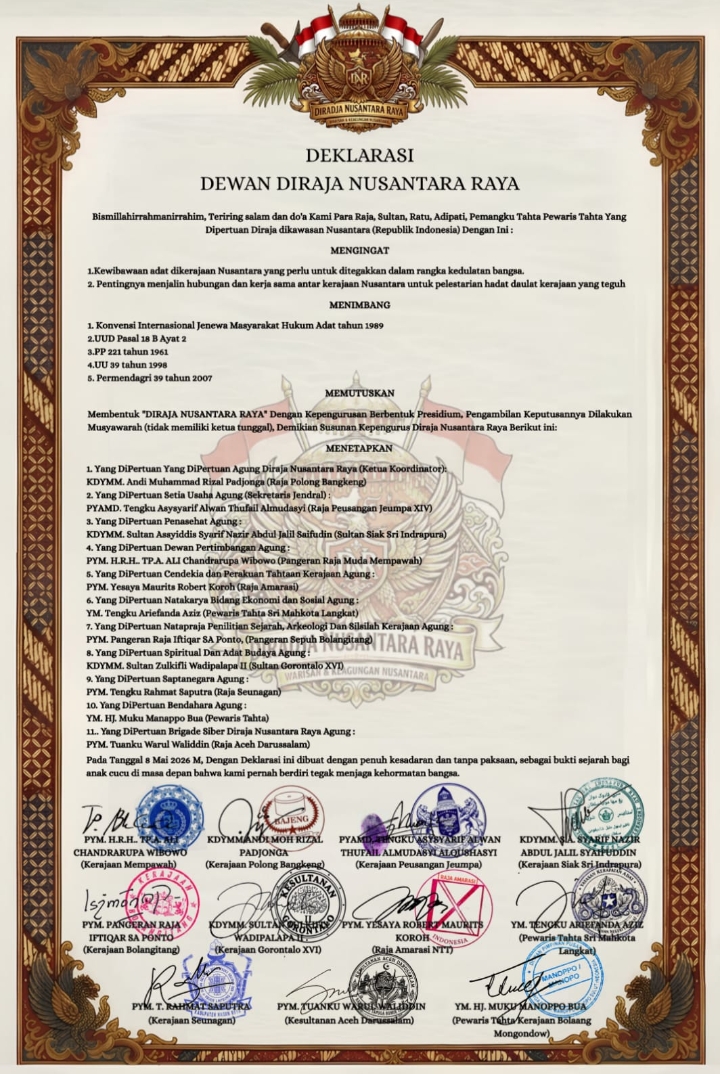
Photo Caption: Document of the Great Nusantara Royal Declaration, signed by 11 Kings, Sultans, Princes, and Royal Successors of the Nusantara archipelago on 8 May 2026, as a form of shared commitment to uphold unity, preserve cultural heritage, and defend the dignity of the Indonesian nation. (Special Source)
The INDONESIAN (Jakarta)— Eleven kingdoms and royal successors across the Nusantara archipelago officially signed the Great Nusantara Royal Declaration on 8 May 2026, marking a milestone in the revival of customary values, cultural heritage, and national unity amid the dynamics of the modern era.
This declaration stands as a symbol of shared commitment among kings, sultans, princes, and royal heirs of the Nusantara realm to uphold the nation’s dignity by preserving customary traditions, strengthening cultural values, and deepening fraternal ties between kingdoms and customary institutions throughout Indonesia.
The document affirms that a nation’s greatness is rooted in noble conduct, high moral character, and respect for history and ancestral heritage that stretches from the easternmost to the westernmost reaches of the archipelago.
“Nusantara is not merely a geographical expanse, but a grand spirit united by the richness of its diverse ethnic groups, languages, and traditions, bound together in kinship,” reads one of the core principles enshrined in the declaration.
The Great Nusantara Royal Declaration also reinforces a shared pledge to serve as a bridge for fellowship among royal courts, customary bodies, and cultural communities — with the aim of strengthening national unity based on the spirit of Bhinneka Tunggal Ika (Unity in Diversity).
Furthermore, customary leaders and royal representatives agreed to make consensus-building, justice, and compassion the foundational principles for maintaining social harmony and peace across the land of Nusantara.
Prince Iftiqar S.A. Ponto explained that the declaration serves not only as a means to preserve and advance Nusantara’s cultural heritage, but also as a pivotal moment to strengthen brotherhood among all kingdoms throughout the archipelago.
“It is hoped that this declaration will serve as a binding force for kinship among Nusantara’s kingdoms and customary leaders, while reinforcing the role of culture as the moral foundation of our nation,” he stated.
The royal figures and customary leaders who signed the Great Nusantara Royal Declaration are as follows:
1. KDYMM. Andi Muhammad Rizal Padjonga — King of Polong Bangkeng (Grand Paramount Ruler of Great Nusantara / Chief Coordinator)
2. PYAMD. Tengku Asysyarif Alwan Thufail Almondasyi — King of Peusangan Jeumpa XIV (Grand Paramount Ruler of Devoted Endeavour / Secretary-General)
3. KDYMM. Sultan Assayyidis Syarif Nazir Abdul Jalil Saifudin — Sultan of Siak Sri Indrapura (Grand Paramount Ruler of the Supreme Advisory Council)
4. PYM. H.R.H. T.P.A. Ali Chandrarupa Wibowo — Crown Prince of Mempawah (Grand Paramount Ruler of the Supreme Council of State)
5. PYM. Yesaya Maurits Robert Koroh — King of Amarasi (Grand Paramount Ruler of Scholarship and Royal Succession of the Great Kingdom)
6. YM. Tengku Ariefanda Aziz — Heir to the Throne of Sri Mahkota Langkat (Grand Paramount Ruler of Economic and Social Affairs)
7. PYM. Prince Iftiqar S.A. Ponto — Senior Prince of Bolangitang (Grand Paramount Ruler of Historical Research, Archaeology, and Genealogy of the Royal Realm)
8. KDYMM. Sultan Zulkifli Wadipalapa II — Sultan of Gorontalo XVI (Grand Paramount Ruler of Spirituality, Customs, and Culture)
9. PYM. Tengku Rahmat Saputra Seunagan (Grand Paramount Ruler of the Seven Realms)
10. YM. Hj. Muku Manappo Bua — Heir to the Throne (Grand Paramount Treasurer)
11. PYM. Tuanku Warul Waliddin — King of Aceh Darussalam (Grand Paramount Ruler of the Great Nusantara Royal Cyber Brigade)
This declaration is intended as a historical legacy for future generations — a testament that the customary leaders and royal houses of Nusantara once stood firm in defending the nation’s honour, safeguarding the noble values of their ancestors, and championing unity within Indonesia’s framework of customs and culture.
(Special Report)