
PRIME NEWS POST
The INDONESIAN (JAKARTA) — In commemoration of Pancasila Sanctity Day, Wardi Jien, KMM., S.H., M.M., National Leader of Gong Pancasila, emphasized that the noble values embodied in Pancasila can only be truly realized when supported by a system of national and state life that is just, civilized, professional, and grounded in law and morality.
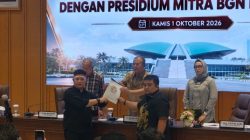
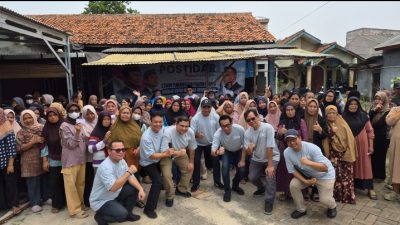
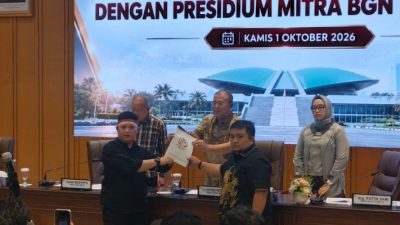
Wardi Jien conveyed this statement on the sidelines of a national discussion involving students and community figures, held in an atmosphere of deep reflection and unity on Monday (1/6/2026), coinciding with the commemoration of Pancasila Sanctity Day.
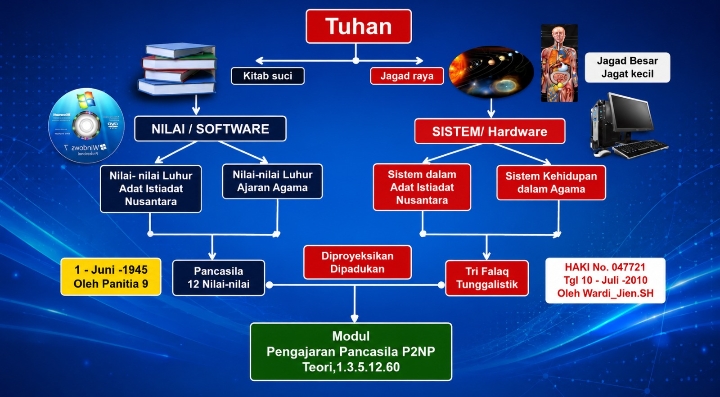
According to Wardi Jien, Pancasila is not merely the foundation of the state, but a crystallization of the noble values of customs, culture, and religious teachings that have thrived within the archipelago’s civilization since ancient times. These values serve as the moral foundation that must be continuously upheld and implemented in every aspect of national and state life.
“Pancasila contains twelve noble values that form the soul of the Indonesian nation: Divinity, Humanity, Justice, Civilization, Unity, Popular Sovereignty, Leadership, Wisdom, Prudence, Deliberation, Representation, and Social Justice. These values serve as the guideline for building a dignified national and state life,” Wardi Jien stated.
Nevertheless, he warned that these noble values would be rendered meaningless if the system tasked with upholding them becomes damaged.
“The good values contained in Pancasila will have no meaning and cannot be realized if the system is flawed. No matter how noble a nation’s values are, without a just and authoritative system, their implementation will depend entirely on the personal will of those in power,” he asserted firmly.
Wardi Jien explained that in family life, organizations, society, and the state, people require legal certainty, governance certainty, and certainty of justice. Therefore, the system plays a vital role as an instrument ensuring all elements operate according to rules agreed upon collectively.
In his view, the future of a nation must never rely solely on the figure of a leader. When the system fails to function properly, the fate of an organization or state becomes entirely dependent on the character of the individuals in power.
“If the leader is good, conditions may run well. But if the leader is corrupt or incompetent, disorder will easily follow. This is why we must build a system capable of guiding and ensuring that anyone remains aligned with the values of Pancasila, regardless of who is leading,” he said.
He further explained that thinkers worldwide have identified the system as the primary factor behind the success of any organization or state. A system that is professional, proportional, transparent, high-quality, and just will minimize human error and ensure institutional sustainability over the long term.
In his perspective, a broken system causes extremely dangerous impacts on national and state life. There are at least three major consequences resulting from systemic failure:
First, the emergence of moral anarchy, when ethics and rules are no longer enforced consistently, allowing personal interests and selfish desires to dominate public spaces.
Second, a crisis of public trust in the law and state institutions, driven by widespread perceptions of injustice among the people.
Third, institutional collapse, which can trigger social, economic, and political crises, as well as conflicts within society.
“When the law is no longer enforced fairly, the public loses trust. When rules apply only to certain groups, national unity is threatened. This is why the system must act as a guardian of justice that applies equally to all citizens,” he noted.
Wardi Jien emphasized that a good system essentially functions as a moral restraint, controlling the abuse of power and directing human potential toward collective prosperity. With a just and authoritative system, all components of the nation will be encouraged to live in accordance with divine values, uphold human dignity, strengthen unity, and deliver social justice for all Indonesian people.
“The integrity and sovereignty of the nation can only be maintained if all elements of society are guided by a just and authoritative system. The system must direct all parties toward a common goal: a life rooted in divinity, humanity, mutual benefit, and justice for every Indonesian citizen — not just for certain groups,” he concluded.
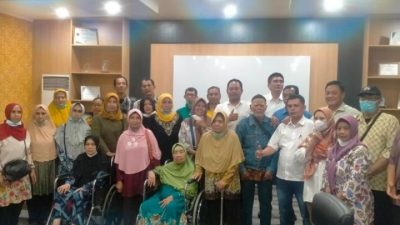
The national discussion, attended by students and community leaders, served as a moment of reflection, affirming that commemorating Pancasila Sanctity Day should not remain merely an annual ceremony. Pancasila must be continuously revitalized through the strengthening of national and state governance systems that translate the nation’s noble values into real action, toward realizing an Indonesia that is sovereign, just, prosperous, and dignified.
Reported from various media sources //photo from Google documents // contribution by Prime News Post international online media // news.paper
Related News