
PRIME NEWS POST
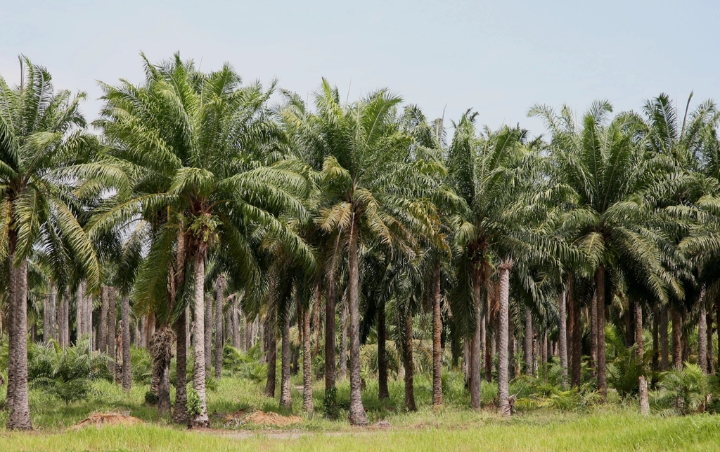
The INDONESIAN (Kalimantan) — The lives of oil palm farmers in Kapuas Regency, Central Kalimantan, are now in a deeply concerning state. Communities who have relied entirely on oil palm plantations for their survival—carrying out all activities from planting and tending crops to harvesting—are facing the harsh reality of being driven off the land that serves as their only source of income.
This situation has raised widespread public alarm, as the process of clearing the land is suspected to have involved state security personnel. Suryadi, S.H., widely known as Daeng, legal representative of PT KJP Mitra Niaga Makmur Mandiri (KJPM3), stated that the actions taken have undermined the community’s sense of justice.
“The deployment of public order and mobile brigade units to evict farming communities, who have managed these plantations for years, is deeply regrettable and potentially violates fundamental principles of fairness,” he said on 23 April 2026.
For these farmers, oil palm plantations are far more than economic assets; they form the foundation of their lives and the hope for their families. When access to this land is taken away, they lose the means of supporting their daily existence.
The conflict stems from a legal dispute between PT Anakin Energika Lestari (PT AEL) and PT KJP over ownership of oil palm plantation land previously held by PT SMJL. The contested areas are located in Lahei Village and Taburei Village, within the Mantangai District of Kapuas Regency.
However, what began as a dispute between corporations has now evolved into a social crisis, directly affecting local farmers who have actively and productively managed the land over a long period.
Adding to the issues, a profit-sharing arrangement has been introduced which many view as unfair: 70 percent of earnings go to the companies, while farmers receive only 30 percent. This model has met strong opposition, as it does not reflect the significant contribution farmers have made, having been the primary managers of the land from the very beginning.
“Farmers have built everything from scratch, yet they receive only a small share. This is clearly a form of structural injustice,” Suryadi emphasized.
Involvement of Agrinas and State Policies Called into Question
As the conflict remains unresolved, new developments have emerged regarding the involvement of PT Agrinas Palma Nusantara in land management. The company claims its operations are based on strategic government policies outlined in a Presidential Decree.
Even so, the implementation of these policies on the ground has sparked resistance and opposition from local communities. Many parties have raised questions about the legitimacy, transparency, and methods used in the process of taking control of and managing these lands.
The entry of a new organization into an ongoing dispute, without any final legal resolution having been reached, is seen as creating potential conflicts of interest and opening opportunities for abuse of authority.
Furthermore, the use of security forces during land clearance is regarded as a form of intimidation against local residents. This not only damages public trust in justice but also carries the risk of escalating social tensions across the region.
The situation is made even more complex by concerns that law enforcement efforts have not been carried out effectively. Previously, in June 2025, five dump trucks belonging to KJPM3 were seized by the Central Kalimantan Regional Police.
In addition, legal representatives have sent formal letters to the President of the Republic of Indonesia, Prabowo Subianto, and the Chief of the Indonesian National Police, Listyo Sigit Prabowo. Although the Police Professional and Security Division has followed up on the reports, actions taken on the ground are considered to have failed to address the core issues, with the situation remaining largely stagnant.
There are also allegations that activities are being carried out on the land without strong legal basis, and even before any ruling has been issued by the State Administrative Court. This further highlights the legal uncertainty that places ordinary members of the community at a disadvantage.
Various legal steps have already been taken, including submitting reports to the Corruption Eradication Commission, filing complaints with the Ministry of Law and Human Rights, and launching legal proceedings at the Surabaya District Court. Despite these efforts, farmers continue to face the risk of losing their livelihoods, enduring pressure, and living with uncertainty about their future.
Legal representatives have urged PT Agrinas Palma Nusantara, as an entity operating under national strategic policies, to act in a wise, transparent, and fair manner. They have also called on the company to avoid setting harmful precedents regarding the protection of farmers and the governance of the country’s plantation sector.
This case serves as clear evidence that, in the pursuit of investment and natural resource management, the fundamental rights of local communities must never be sacrificed.
“What we ask for is simple: objective justice, not processes that are delayed or manipulated to serve certain interests,” he concluded.
#@Reported from various media sources //photo from Google documents // contribution by Prime News Post international online media // news.paper
Related News
(Reported by Redaksi and Bar)