

PRIME NEWS POST
The INDONESIAN (JAKARTA( – The Secretary General of the Indonesian Customary Assembly (MAI), M. Rafik Datuk Rajo Kuaso, has sharply criticized the policy of PT Agrinas Pangan Nusantara, which plans to import 105,000 units of pickups from India for the Red and White Village Cooperative’s food distribution program. This policy is deemed not just a procurement issue but a reflection of a policy direction that contradicts the spirit of national industrial development and economic independence.
According to Rafik, this massive import decision indicates a policy that is not aligned with the vision of national economic independence that has been promoted by President Prabowo Subianto, particularly in strengthening strategic industries and developing homegrown products.
“The procurement of vehicles on such a huge scale should be a golden opportunity to build the national automotive industry. However, what is happening is the opposite, which is to provide a large market for foreign industries,” Rafik emphasized.
He believes that PT Agrinas Pangan Nusantara’s steps are not just ordinary business policies but represent strategic decisions that could weaken the development of the national industry if not corrected immediately.
**Contradicting National Industrial Policy Direction**
Rafik stated that MAI fully supports the stance of the Minister of Industry, Agus Gumiwang Kartasasmita, who emphasizes the importance of strengthening domestic products as part of national economic development strategy.
He argued that supporting the national industry is not just a policy choice but a mandate for national development.
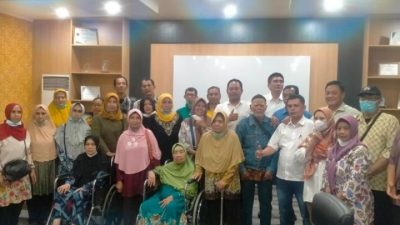
“The Indonesian Customary Assembly views that large-scale vehicle procurement should become a momentum to strengthen the national industry, not increase dependence on imported products,” Rafik said at the MAI Forum attended by various Kings, Sultans, Datuks, and customary leaders throughout the archipelago.
Rafik criticized Agrinas’ reasoning that there are no domestic-produced 4×4 pickups as a justification for conducting such large-scale imports without efforts to build the national industry.
He suggested that if Indonesia does not yet have domestic 4×4 vehicle production, procuring 105,000 units should have been turned into a national strategic project to create operational vehicles developed by Indonesians through industrial collaboration and technology transfer.
**Questioning Agrinas’ Commitment**
MAI criticized the statement from Agrinas’ leadership questioning the government’s support for the people or national automotive producers as a misguided perspective that does not reflect long-term national interests.
According to Rafik, support for the national industry is a genuine form of support for the Indonesian people.
“Commitment to national products is a commitment to the Indonesian people. Conversely, large-scale imports will only transfer economic benefits and jobs abroad,” he asserted.
He believes that the vehicle import policy valued at tens of trillions of rupiah has the potential to set a bad precedent for the development of the national industry if not seriously reconsidered.
“If such a large project is not directed to strengthen the national industry, then when will this nation stand on its own feet?” he asked.
**Highlighting Neglect of National Vehicles**
Rafik also pointed to the irony of the import policy amid government efforts to develop national vehicles, including the development by PT Pindad, which has been a symbol of national industrial capability.
He stated that the government has the technological and industrial capacity to develop national operational vehicles if supported by strong policy backing.
“If national vehicles can be developed for defense and security needs, then operational vehicles for villages should also be developed by the national industry,” he emphasized.
He questioned why Agrinas did not seize the procurement of vehicles as a momentum to create national operational vehicles based on rural needs.
“Why can’t it be developed as national vehicles? Why must it be Indian vehicles? This is a big question for the public today,” he insisted.
**Lacking Industrial Base in Indonesia**
MAI also highlighted that the imported vehicles from India lack a strong industrial base in Indonesia.
According to Rafik, the absence of a strong Authorized Single Brand Holder (ATPM) network could lead to serious issues in the future, particularly regarding after-sales service, the availability of spare parts, and the sustainability of vehicle operations.
“Vehicles purchased in such large quantities should have guarantees of operational sustainability. Without an industrial base in Indonesia, the long-term risks are significant and could harm the country,” he stated.
**Urging Government to Halt and Evaluate**
The Indonesian Customary Assembly urged the government to comprehensively evaluate the import policy before it causes broader impacts on national interests.
MAI also requested that the vehicle procurement for the Red and White Village Cooperative be redirected as a national strategic project to build the national automotive industry based on the needs of the people.
“Village programs should be the foundation of the national economy, not a gateway for large-scale imports that weaken our own industry,” Rafik stressed.
Rafik reiterated that the Indonesian Customary Assembly would stand at the forefront to ensure national policies favor the independence of the nation and the interests of the Indonesian people.
**Highlighting Potential Deviations in National Programs**
Besides the vehicle import policy, Rafik also pointed out various strategic projects undertaken by PT Agrinas Pangan Nusantara, including the establishment of public kitchens to support the Free Nutritious Food program and the implementation of the Red and White Village Cooperative program.
He believes these national-scale projects must be closely monitored due to their potential for deviations if not managed transparently and accountably.
He emphasized that the Indonesian Customary Assembly does not want national strategic programs, which are fundamentally aimed at benefiting the people, to turn into avenues for corrupt practices that harm the nation.
“We see that large projects such as distribution vehicle procurement, establishing public kitchens for the nutritious food program, and strengthening the Red and White Village Cooperative are very strategic programs that concern the livelihoods of many. However, due to their very large scale, these programs have a rich potential for corrupt practices if not carefully monitored,” Rafik stressed.
According to Rafik, massive projects involving large-scale procurement, establishment of public kitchen facilities, and national logistics distribution are highly susceptible to deviation practices if not accompanied by strong oversight from the government and the public.
He emphasized that the Indonesian Customary Assembly does not want national strategic programs, which are fundamentally aimed at benefiting the people, to devolve into grounds for corrupt practices that harm the nation.
Rafik asserted that transparency and accountability must be the primary principles in the implementation of every national program.
“The larger the budget used, the greater the responsibility to ensure that every rupiah truly returns to the interests of the people, not to the interests of certain groups,” Rafik emphasized.
@Reported from various media sources // photo from Google documents // contribution by Prime News Post international online media