
PRIME NEWS POST
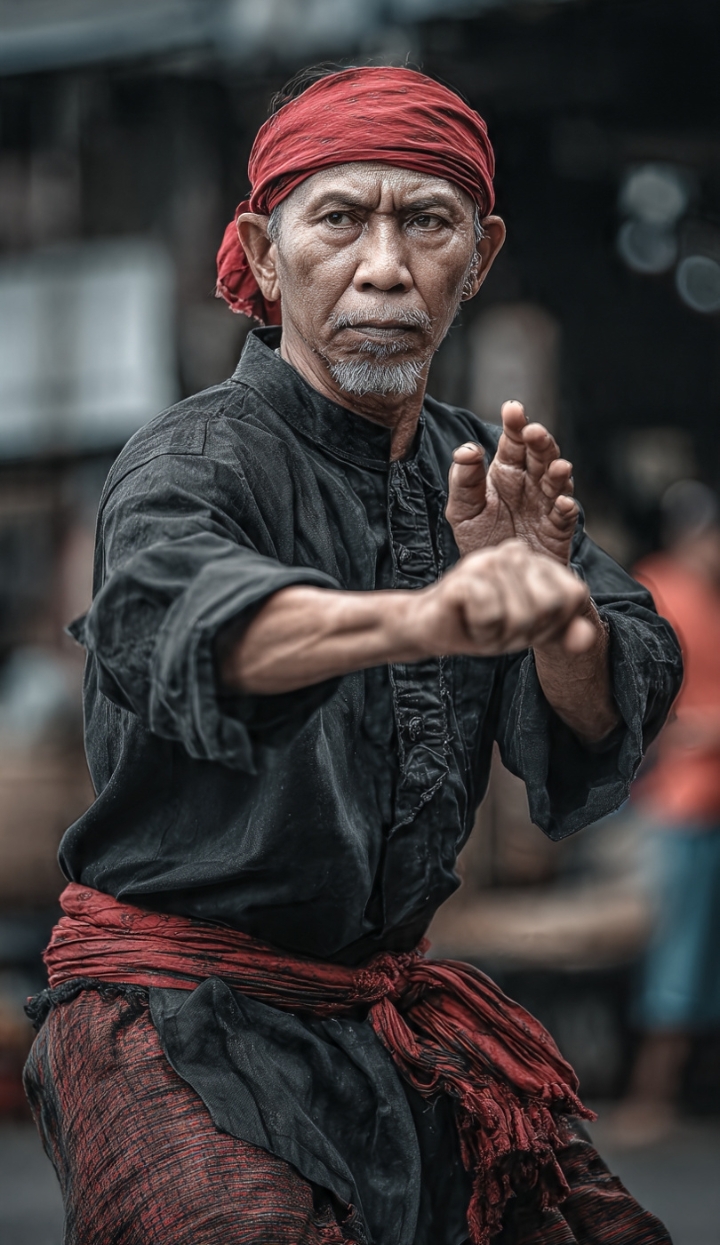
The INDONESIAN (Jakarta) — The great legacy of Betawi culture continues to be celebrated with pride. At almost every official event, its symbols are displayed in grand fashion: towering ondel-ondel puppets are paraded, elaborate traditional gateways are set up, lenong folk theater is performed, and Betawi martial arts (silat) is showcased as a proud emblem of the city.
On stage, everything looks magnificent. Officials speak passionately about the importance of safeguarding cultural roots. Banners declaring preservation efforts are unfurled, seemingly as proof of genuine commitment.
Yet behind this splendor lies a far harsher reality that rarely makes the headlines. Many Betawi silat masters—the true guardians of this tradition—live in deeply concerning conditions. Some reside in houses barely fit for habitation. Others struggle to get by on incomes that fall short of covering basic needs. Many grow old without proper access to healthcare. This is the stark irony: culture is celebrated with great fanfare, yet the people who keep it alive are left to face hardship without adequate support.
This situation raises an uncomfortable but necessary question that demands honest answers: What exactly is being preserved here?
Is it truly the cultural heritage itself that is being protected, or merely the image of caring for culture?
Because if preservation only stops at stage performances, media documentation, and formal speeches—while those who practice and uphold the tradition remain trapped in poverty—then what is taking place is not preservation at all. It is nothing more than a symbolic show.
According to Achmad Fadillah, an observer of Betawi society and culture, Betawi culture has in many ways become a highly effective visual asset used to create a sense of connection to local identity. “It looks beautiful at official events, serves as a backdrop for group photos, and acts as a tool for political legitimacy. But once the lights go down, so does the attention,” he said.
Meanwhile, the silat masters return to their daily lives, facing harsh economic realities that often offer them little security. If this pattern continues, what is being maintained is not culture, but an industry built around projecting a positive cultural image.
“Betawi silat masters are far more than just instructors of fighting techniques or physical trainers,” Achmad Fadillah explained on Friday, May 15, 2026.
“They are the custodians of collective memory. Within their bodies and minds lies a heritage that is never written in official textbooks,” he added.
“They preserve its philosophy, ethics, techniques, the history of local communities, values of honor, and codes of conduct passed down through generations. Betawi silat is not merely a sport or a martial art—it is part of a local civilization that teaches dignity, self-control, courage, and respect for others.”
“When these masters live in economic hardship, what is at risk is not just their personal well-being. What is endangered is the continuity of this cultural knowledge itself. Because traditions are never preserved through billboards, seminars, or ceremonies. They are passed down through the living bond between teacher and student. If the teachers are marginalized, if their livelihoods are unstable, and if the transmission of knowledge is blocked by economic pressure, then slowly but surely the tradition itself will die,” Achmad warned.
“And often, we only realize it is gone when it is already too late.”
Meanwhile, according to the Chairman of FORMASI (Anti-Corruption Community Alliance Forum), the fundamental flaw in many cultural policies is that they focus too heavily on ceremony and spectacle. Culture is treated like an annual event, rather than a living ecosystem that requires consistent, long-term care.
Funds flow freely toward stages, decorations, publications, documentation, catering for guests, and all the other trappings of formal events. Everyone appears busy, active, and committed. But upon closer inspection, the direct benefits for the practitioners of culture remain minimal. This reveals a clear imbalance of priorities: we are so busy celebrating the appearance of culture that we neglect its foundation—the people who keep traditions alive.
In the case of Jakarta, this irony is even more striking, given the city’s enormous financial resources. If even in a city as wealthy as this, cultural masters still live under economic pressure, then the problem is not a lack of budget. It is a matter of where priorities lie and how policies are designed.
Jalih Pitoeng, who has long conducted research through the Jalih Pitoeng Centre, has called for observations to be elevated into full investigations. His persistent efforts ultimately led to the arrest of the head of the DKI Jakarta Cultural Office, who was implicated in massive corruption carried out in a structured, systematic, and widespread manner.
“There is something fundamentally wrong when respect for cultural masters is expressed more through certificates and applause than through policies that actually improve their daily lives,” Jalih said.
“We see silat masters invited to perform at official events, given symbolic awards, and then sent home with no real improvement to their livelihoods,” he lamented.
“It is as if a formal recognition is enough to repay decades of their dedication in preserving tradition.”
“But in reality, certificates do not pay electricity bills. Diplomas do not fix leaking roofs. And photos taken alongside officials will not guarantee there is food on the table tomorrow morning,” he added sharply.
When recognition remains merely symbolic, it turns into empty romanticism—and this kind of sentiment is far more dangerous than outright neglect, because it creates the illusion that everything is fine. Yet behind this narrative of respect, many cultural masters are struggling just to survive.
This criticism also extends to certain organizations and institutions that claim to be guardians of Betawi culture. Many speak loudly about preservation, yet contribute very little to improving the welfare of silat masters. Culture is sometimes used merely as a vehicle to gain social influence, strengthen political networks, or secure access to government programs.
The language of preservation becomes a noble-sounding slogan, but is rarely translated into meaningful action that addresses the root of the problem. As a result, cultural protection turns into little more than an administrative ritual—marked by countless meetings, declarations, and ceremonies, but producing almost no tangible change for those who practice the culture. This is a hard criticism, but one that must be spoken. Because if cultural organizations care more about protecting their own image than protecting the people behind the tradition, they are only perpetuating the problem.
Even more ironic is how Betawi identity is frequently used as a political symbol at key moments. The culture is lifted high as proof of leaders’ closeness to the local community, but this commitment often remains nothing more than rhetoric. Cultural identity becomes a tool for legitimacy, rather than a substantive promise of support. In this context, silat masters are reduced to being the public face used to beautify grand narratives of tradition. They appear as symbols, but are rarely treated as central beneficiaries of policy. This is the subtlest form of cultural objectification: traditions are exploited for image-building, while their guardians remain on the margins. If this situation continues, cultural preservation will become nothing more than a symbolic industry—busy creating impressions, but never delivering real change.
Yet the solution to this problem is actually very clear and practical. What is needed is not temporary sympathy, but a dignified, sustainable system of support. Betawi silat masters must be recognized as the city’s intellectual and cultural assets. They require proper registration, health insurance, decent housing support, regular stipends, adequate training facilities, and structured programs to train future generations. This is not an excessive demand—it is the logical way to honor those who keep cultural heritage alive. If the government can build massive infrastructure projects, ensuring the well-being of cultural custodians should not be impossible. All that is required is the political will and courage to shift policies from focusing on appearances to delivering real support.
Jakarta often prides itself on being a global city that still honors its local roots. That claim sounds inspiring—but its true measure is not how often Betawi culture is performed at major events.
The real test lies in how the guardians of that culture live. A city that truly values its heritage will ensure its cultural masters live with dignity, not left to grow old in hardship while being repeatedly called upon to fulfill ceremonial agendas.
If so many Betawi silat masters continue to live in difficult conditions, then the claim of preserving culture must be honestly re-examined.
In the end, this issue demands the courage to speak the truth. Betawi culture does not need more slogans—it needs genuine commitment. And silat masters do not need only stages and praise.
Responding to this situation, activists born and raised in the Betawi community have repeatedly raised their voices firmly in public forums and through the media.
“It is utter nonsense to talk about preserving and developing Betawi culture while corruption within the very Cultural Office itself is ignored,” Jalih Pitoeng stated bluntly.
These masters deserve a decent life. If cultural preservation continues without improving the welfare of those who practice it, then someone must have the courage to lead a revolutionary shift.
Because a culture that is only put on display, but fails to honor its people, is not truly being preserved—it is being sold on the market of performances and events.
And if this is allowed to continue, history will record that Jakarta did not fail to celebrate Betawi culture it failed to respect the people who kept it alive.
Reported from various media sources //photo from Google documents // contribution by Prime News Post international online media // news.paper
Related News