
PRIME NEWS POST
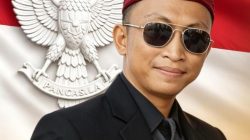
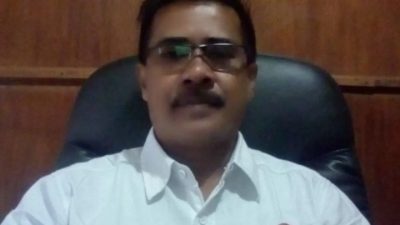
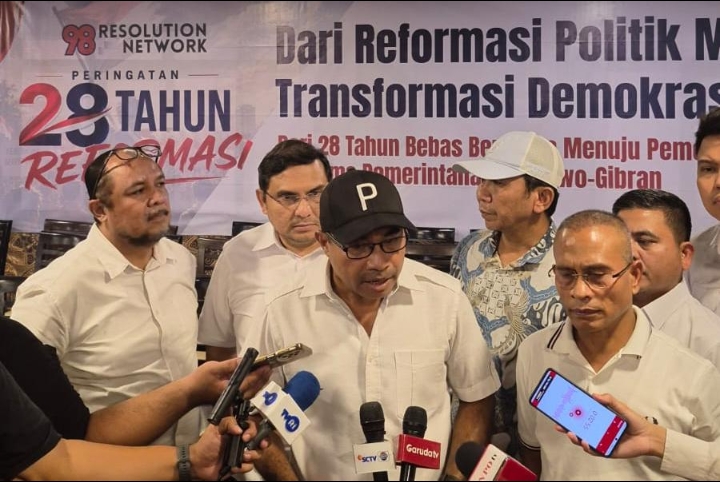
The INDONESIAN (Jakarta) – If we examine narratives such as “Indonesia is bankrupt,” “Sell Indonesia,” “Dark Indonesia,” “Flee Indonesia,” and “Dump the Rupiah,” such baseless claims opposing Indonesia’s self‑reliance are highly anomalous and have no place in the tradition of social movements. This was stated by Haris Rusly Moti, Coordinator of the 98 Resolution Network, in a media release issued in Jakarta on Sunday, June 14, 2026.
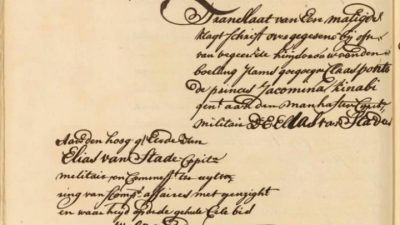
Haris contrasted these destructive narratives with the inspiring vision of Indonesia’s independence era. In 1928, Bung Hatta delivered his famous defense statement before the colonial court in The Hague, Netherlands, putting forward the vision of “Independent Indonesia.”
Two years later, in 1930, Bung Karno appeared before the colonial court in Bandung and presented his landmark defense speech titled “Indonesia Accuses.” Both leaders articulated an opposing view to colonialism: the vision of a free and sovereign Indonesia.
“It is deeply concerning that 80 years after Indonesia’s independence, we now see these harmful narratives claiming the country is bankrupt or should be sold. It is painful that such ideas are being promoted by certain intellectuals and student groups who claim to act in the name of social movements,” Haris said.
Haris noted that President Prabowo has revived the vision of the independence era. The ideas of economic self‑reliance and ending the seizure of the nation’s wealth and natural resources by oligarchs — once only discussed on the margins of public discourse — have now become central themes and official policies under the current administration.
In his many speeches, President Prabowo consistently emphasizes that Indonesia must be sovereign and self‑sufficient. Beyond rhetoric, he has introduced concrete policies to build a national economy based on self‑reliance, as envisioned by the country’s founding fathers.
“While critics demand action against corruption, President Prabowo has gone further by addressing the root causes: stopping revenue leakage, under‑invoicing, and transfer pricing. Previously, the Corruption Eradication Commission (KPK) only dealt with smaller‑scale corruption in state spending,” Haris explained.
He added that these government critics appear frustrated and out of ideas. “It seems they lack the intellectual capacity to offer counter‑arguments to the President’s vision and policies. Instead, they resort to stirring up issues, spreading intrigue, and making personal attacks on President Prabowo,” Haris said.
“They hope their insults and provocations will be met with a heavy‑handed response, which they can then use to frame the government as an authoritarian, anti‑democratic regime,” he emphasized.
The Tradition of Social Movements
Haris explained that the true purpose of social movements is to offer alternative views as a response to conditions seen as unjust or deviant. As an example, past movements advanced the idea of “A Clean Indonesia” as a counter‑vision to a state perceived as corrupted and controlled by oligarchic interests.
“Consider the social and political movements during the New Order era, which championed political democracy as an alternative to the authoritarian rule of President Soeharto. In the reform era, movements opposed neoliberal policies that privatized state‑owned enterprises and cut subsidies meant for the people,” Haris continued.
At that time, he noted, the International Monetary Fund criticized the strengthening of state‑owned enterprises as distorting market mechanisms, while public subsidies were dismissed as wasteful spending.
“It is deeply concerning that today’s student groups and critics are opposing policies that benefit the people. Instead, they adopt the views of neoliberal economists, treating state budget allocations for public welfare as unnecessary expenditure,” Haris said.
“In our view, any movement that opposes budget allocations for the people, rejects the free nutritious meal program, support for fishing villages, and public schools, represents the most extreme anomaly in the history of social movements. I am certain such efforts will never win broad public support,” he added.
Haris stressed that if corrupt officials misuse public welfare programs, the corruption itself should be eliminated — not the programs.
“Even long‑standing social assistance schemes have faced corruption. This is even more relevant for the free nutritious meal program, which is a new initiative and Indonesia’s first large‑scale effort to provide healthy meals for students,” he said.
Haris challenged the government’s critics to clearly present their own alternative vision and explain how it differs from the policies of President Prabowo.
“I doubt they have the intellectual capacity to offer a credible counter‑perspective to the President’s agenda,” Haris concluded.
Reported from various media sources //photo from Google documents // contribution by Prime News Post international online media // news.paper
Related News