
PRIME NEWS POST
Jakarta, THE INDONESIAN— His Serene Highness Tuan Janton Daulay, Syeikh Baginda Sultan, QS, Sultan Syarif Padang Lawas, today issued an official statement regarding “The Royal Mandate of Nusantara Kingship Based on the Divine Sovereignty.” The statement aims to provide deeper insight into the role and responsibilities of a Raja (King) within the context of Nusantara customs and cultural heritage.
In his explanation, Sultan Syarif Padang Lawas emphasized that in Nusantara tradition, a Raja is not only regarded as the head of customary governance but also as the bearer of a divine trust— a moral and spiritual mandate passed down through ancestral lineage. This concept is known as Ilahi Raja, or the sacred sovereignty bestowed by the Creator.
The Authority of a Nusantara Raja
Sultan Syarif Padang Lawas highlighted that the authority of a Nusantara King is rooted in three fundamental pillars:
- Ancestral Legitimacy (Daulat Warisan):
A Raja is entrusted with leadership due to his ancestral lineage, upheld and sanctified by the forebears. This legitimacy is not merely biological but represents inherited values, teachings, and customary responsibilities. - Customary Authorization (Daulat Adat):
Royal decrees are carried out based on customary norms, the deliberation of adat elders, the guidance of traditional leaders, and the consensus of the palace or adat mandala. A legitimate decree is one that is “accepted by adat” and aligns with the collective welfare of the community. - Divine Mandate (Daulat Ketuhanan):
The concept of Ilahi Raja signifies that a king does not rule by personal will, but by a moral mandate believed to be guided by the Almighty. In this regard, the king serves as guardian of balance, custodian of noble values, protector of customary communities, and moral compass of society. His authority is spiritual and cultural—not political.
Royal Decrees as Instruments of Authority
According to Sultan Syarif Padang Lawas, royal decrees serve as:
- Ethical and Moral Guidance:
A decree is not a coercive command but a morally binding directive for all customary circles. - Assertion of Customary Stance:
It clarifies customary boundaries, prevents misuse of tradition, reinforces cultural values, and unifies the steps of adat leaders. - Unification of the Adat Mandala:
Royal decrees often form the basis for appointing adat leaders, establishing customary institutions, strengthening cultural values, and synchronizing adat visions across the Nusantara.
Connection Between Royal Decrees and the Concept of Ilahi Raja
A decree labeled as “based on the Divine Sovereignty” signifies that it is issued through traditional deliberation and spiritual discernment—not for personal interest, but for the benefit of customary communities and the preservation of noble values. Such decrees serve as moral guides to uphold harmony, customary justice, and cultural dignity.
The Position of Royal Authority in Contemporary Society
In the modern era, Nusantara royal decrees do not replace state law or contradict constitutional authority. Instead, they function as respected cultural norms that serve as moral guidance and identity for customary communities. The role of a traditional king is to safeguard values, rather than exercise political power.
Conclusion
Sultan Syarif Padang Lawas concluded that the royal authority of Nusantara—grounded in ancestral mandate, divine guidance, and customary validation—exists for the protection of culture, the well-being of customary societies, and the preservation of Nusantara’s noble identity. It represents moral and spiritual authority, not political dominion, and stands as a vital pillar in upholding the dignity of tradition and the character of the nation.
About His Serene Highness Tuan Janton Daulay, Syeikh Baginda Sultan, QS
His Serene Highness Tuan Janton Daulay, Syeikh Baginda Sultan, QS, is the Sultan Syarif Padang Lawas, a respected customary leader recognized for his dedication to preserving the cultural values of the Nusantara. He is actively involved in social and cultural initiatives and serves as an exemplary figure for customary communities in Padang Lawas and its surrounding regions.
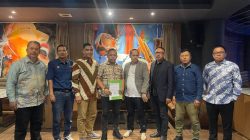
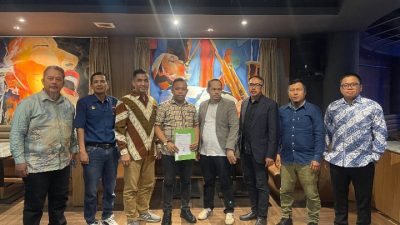
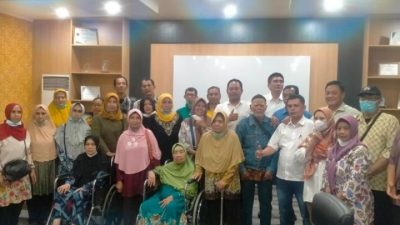
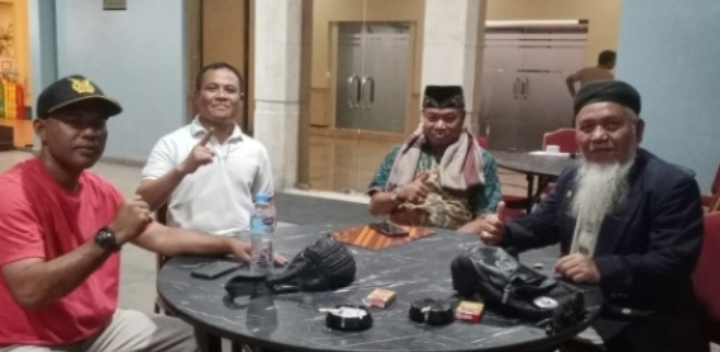
Photo Information: Sultan Syarif is seen together with several prominent figures at Tavia Hotel, Jakarta