
The INDONESIAN (Bekasi)— This year’s commemoration of the International Day to End Impunity for Crimes against Journalists once again exposes the deep scars of Indonesia’s press freedom. In Bekasi Regency, the name Diori Parulian Ambarita, better known as Ambar, has become a living symbol of the growing vulnerability of journalists and the sluggish commitment of law enforcement in addressing violence against the press.
Ambar — an investigative journalist and Supervisory Board Member of the Forum Wartawan Jaya Indonesia (FWJI) — fell victim to two separate criminal attacks in 2025.
The first incident occurred in January 2025, under the jurisdiction of Babelan Police Sector, when Ambar was pursuing an investigative report into alleged irregularities on the ground. He was assaulted by unidentified individuals believed to be connected to the subjects of his investigation.
Before recovering from that ordeal, another violent attack struck him in September 2025, in the Tambun Selatan area of Bekasi. While covering a follow-up story on the distribution of unsafe consumer products, Ambar was beaten, intimidated, and had his reporting equipment forcibly taken, accompanied by serious threats.
Despite both incidents being reported to the police, no perpetrators have been arrested to date. The investigation has stalled, showing little to no progress — a situation that has sparked deep concern among journalists and the public who care about press freedom and accountability.
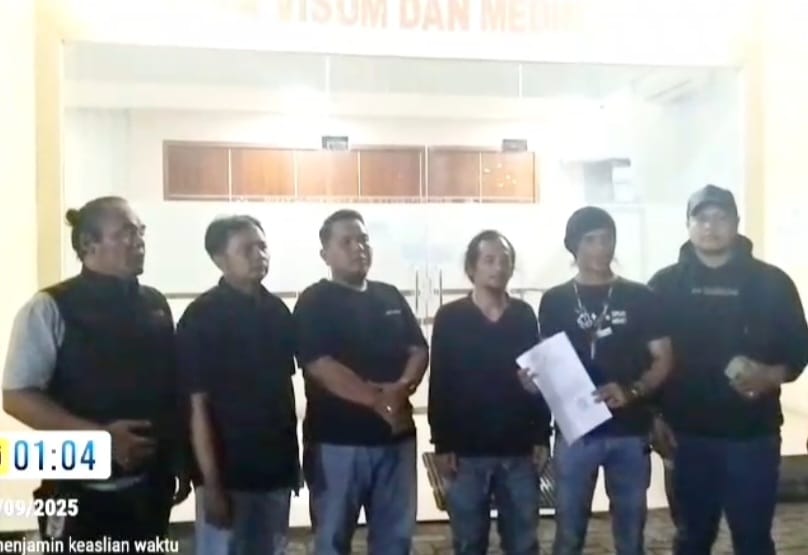
“The case is clear, and evidence has been submitted, yet there’s been no meaningful progress. We demand that the authorities act decisively and transparently,” said a representative of FWJI Bekasi in an official statement.
An Attack on the Press Is an Attack on the Public
Violence against journalists is not merely an assault on an individual it is a direct attack on the public’s right to truthful information.
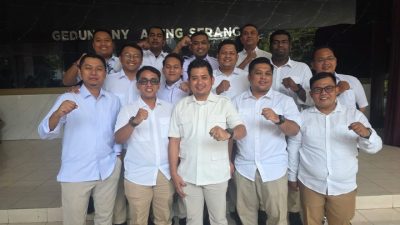
Support for Ambar has poured in from numerous journalist organizations and civil society groups, including the Aliansi Wartawan Indonesia Bangkit Bersama (AWIBB), Forum Pers Independen Indonesia (FPII), Persatuan Wartawan Republik Indonesia (PWRI), as well as various NGOs and legal aid institutions (LBH).
“We stand with Diori Parulian Ambarita. This is not just about one journalist, but about the safety and freedom of all who report the truth,” said a representative from FPII during a joint solidarity forum with FWJI.
These groups have urged that the investigation must not end at the reporting stage, but must continue until all perpetrators are brought to justice.
Their unified stance underscores a systemic issue: impunity is not an individual problem, but a structural failure in Indonesia’s law enforcement and press protection mechanisms.
Weak Legal Protection: A Threat to Democracy
Ambar’s case is only one of many dark examples of impunity in violence against journalists across Indonesia.
Data from press freedom monitors show that dozens of such cases over the past year remain unresolved. Most have ended in silence reports ignored, evidence dismissed, and perpetrators untouched.
This occurs despite Law No. 40 of 1999 on the Press, which explicitly guarantees press freedom and protection for journalists performing their duties.
In practice, however, journalists often become targets of intimidation and violence while exposing corruption, environmental crimes, and public misconduct.
The Bekasi case adds yet another chapter to a grim reality: the courage to tell the truth is often met with brutality and threats.
FWJI: Justice for Ambar Is Justice for the Press
The Forum Wartawan Jaya Indonesia (FWJI) has reaffirmed its commitment to pursue this case until justice is served.
In its statement, FWJI called on law enforcement to act professionally, transparently, and responsibly.
“If the authorities cannot protect journalists, how can the public trust justice?” Ambar said during a reflection on this year’s International Day to End Impunity for Crimes against Journalists.
FWJI also announced plans to hold a solidarity action and public discussion titled “Ending Impunity, Upholding Justice for Journalists”, involving press organizations, legal experts, and civic groups.
The event aims to raise public awareness that journalist safety is a fundamental human right and a cornerstone of democracy.
A Day of Remembrance and a Call to Action
Every year on November 2, the world observes the International Day to End Impunity for Crimes against Journalists.
But for the press community in Bekasi, this day is more than symbolic it is a painful reminder that justice for Diori Parulian Ambarita and many other journalists remains long overdue.
“Every act of violence against a journalist left unpunished is an assault on democracy,” said a media activist during the FWJI discussion.
“We cannot allow impunity to become a culture.”
Ambar’s case is a test of law enforcement, of society, and of the nation’s conscience.
And until justice is served, the struggle will continue.
Editor : Journalist Prime News Post