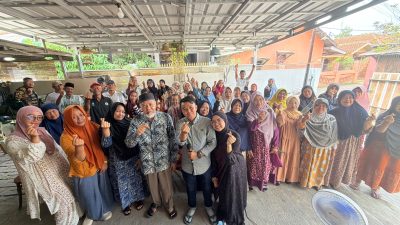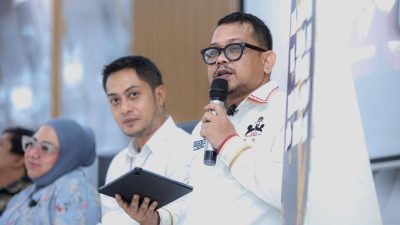


Jakarta – In the Dauroh Marhalah 3 (DM3) KAMMI Jakarta agenda themed “Born to Lead: Jakarta’s Adaptive Heroes for 2045,” Umar Ahmad Zain, a KAMMI cadre from West Java, presented strategic ideas regarding the direction of KAMMI’s movement transformation amidst increasingly rapid socio-technological changes. Umar believes that the generation of leaders for 2045 can only emerge if the youth movement dares to renew its way of thinking, networking, and fostering cadres according to the demands of the times.
In his presentation, Umar emphasized three foundations of transformation that need to be accelerated immediately.
First, building the critical thinking abilities of cadres as an absolute requirement to face the era of disruptive technology. According to him, technological innovations that change the face of civilization do not arise from passive mindsets, but from a tradition of questioning, challenging assumptions, and reading patterns of change. KAMMI cadres must be at the forefront, becoming a generation capable of processing data, seeing opportunities, and solving problems in creative and insightful ways.
Second, making KAMMI more inclusive, both in networks and ideas. Umar emphasized that the exclusive image in the eyes of the public must be changed into an open space for engagement. He invited KAMMI to build broader relationships, not only among internal members but also with youth from across organizations, technology communities, academia, and social networks. “KAMMI was not born to produce leaders who only lead KAMMI,” he asserted, “but leaders who serve the entire Indonesian society.”
Third, reconstructing the cadre development pattern to align with the development of the digital industry and the needs of new competencies. Umar conveyed that future leadership is not sufficiently filled by those who are fluent in speaking or have strong personal influence alone. Modern Indonesian leaders must understand the use of technology, be able to read data, be quick to adapt in rapid dynamics, and still maintain the core values of the movement that become KAMMI’s identity.
He emphasized that responsive cadre development does not mean abandoning principles, but reviving those values in a more relevant and effective format. That way, KAMMI can give birth to a generation of leaders who are not only idealistic but also competent, adaptive, and ready to lead in an ever-moving technological landscape.
Umar’s ideas in Jakarta’s DM3 reinforce the main message of the activity: building young leaders who are born from the courage to change, the ability to read the future, and the commitment to serve Indonesia 2045.