
PRIME NEWS POST
JAKARTA ||
Recent economic turbulence, the weakening of the rupiah, and rising public criticism should not be viewed in isolation. Indonesia is not facing an ordinary crisis today; rather, it is dealing with the consequences of unresolved economic challenges that have accumulated over two decades. Amid fierce competition of narratives in public discourse, the nation is currently undertaking one of its most extensive economic restructuring efforts since the reform era.
Student demonstrations held across various regions are a normal part of a healthy democracy. Students have the right to oversee state policies and voice public aspirations. However, given the complexity of the issues Indonesia faces, constructive criticism must be rooted in a comprehensive understanding — not merely a reaction to surface-level symptoms.
At the same time, the world is entering a new era of geo-economic competition. A nation’s strength is no longer measured solely by military power, but also by its ability to secure control over energy, trade, technology, strategic minerals, food security, and global supply chains. Countries that can manage their own economic resources gain greater stability and better protect the future of their people.
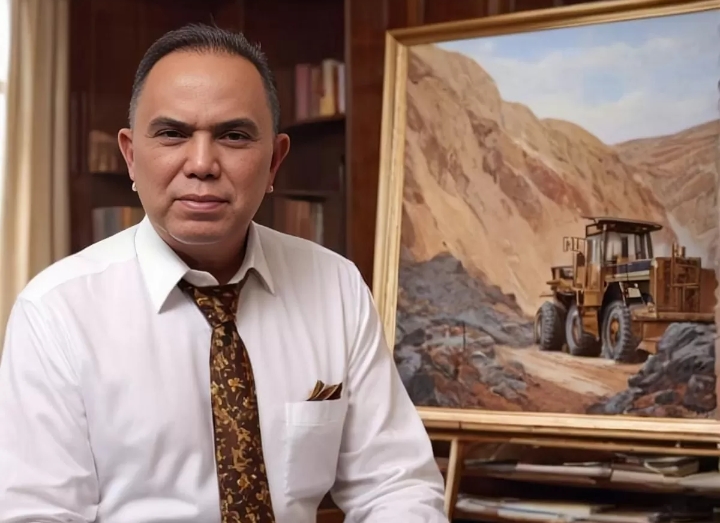
Against this backdrop, Ir. R. Haidar Alwi, MT — President of Haidar Alwi Care and the Haidar Alwi Institute, as well as a Member of the Advisory Board of the ITB Alumni Association — emphasized that students need to understand national economic issues in full context so that their criticism addresses root causes rather than just visible symptoms.
“Students are the guardians of the nation’s common sense. But sound judgment cannot be built on fragmented information. In this era of global economic competition, the intellectual generation must be able to analyze cause and effect, and understand how a nation functions before drawing conclusions. Meaningful criticism always comes from complete knowledge, not from temporary noise,” Haidar Alwi stated firmly.
This message carries particular weight because Indonesia is currently carrying out large-scale economic reforms that go beyond fiscal adjustments — they also aim to plug decades-long economic leakages.
Behind the Turbulence: A Major Effort to Stop National Economic Leakage
Indonesia is not starting from scratch; it is working to resolve a massive backlog of economic issues built up over twenty years. In economics, this process involves what is known as “transition costs” — the disruptions and adjustments that occur when a country overhauls long-standing systems.
One key challenge facing Indonesia is economic leakage, a condition where the nation’s wealth does not fully translate into benefits for its people. A major form of this leakage is under-invoicing, where Indonesian commodities are declared at artificially low values when exported to intermediate countries, before being resold at their true market price in the final destination.
This practice can deprive the state of significant revenue over time. In the long run, it limits the government’s ability to fund development, education, healthcare, and other strategic public needs.
Additionally, Indonesia faces challenges from economic cartels that have exploited gaps in trade and natural resource governance for years. These include cartels involved in under-invoicing, oil and gas, and palm oil, which have built complex systems of economic rent-seeking.
As the government strengthens trade regulations, expands the role of state-owned enterprises, and improves natural resource management through institutions such as Danantara, these groups — which have long benefited from weak oversight — naturally face restrictions to their operations.
The administration of President Prabowo Subianto and Vice President Gibran Rakabuming Raka is therefore tasked with addressing structural issues that have remained unresolved for decades. This process is not easy and requires time, consistency, and support from all sectors of society.
“Indonesia is not a poor country; it is a country that has suffered from economic leakage for far too long. What is at stake today is not just growth figures or short-term fluctuations, but who will control Indonesia’s wealth in the future. A strong nation is one that safeguards its resources so they translate into prosperity for its own people,” Haidar Alwi explained.
For this reason, Indonesia must also strengthen its economic sovereignty — the ability to control its own resources, trade, and economic interests, rather than remaining overly dependent on external parties.
Students Must Distinguish Between Criticism, Symptoms, and Root Causes
Haidar Alwi stressed that students hold a vital position in a democracy, but this role comes with significant intellectual responsibility.
For example, the weakening of the rupiah should not be taken as the sole measure of a nation’s success or failure. Exchange rates are influenced by many factors, including geopolitical conditions, international trade, global energy prices, and trends in global financial markets.
In certain contexts, the strengthening of neighboring currencies such as the Singapore dollar or Malaysian ringgit relative to the rupiah may also shape public perception and increase spending by foreign visitors in Indonesia. Yet such phenomena must be analyzed comprehensively and should not form the sole basis for broad conclusions.
Students also need to understand the concept of state capture — a situation where interest groups seek to influence government policies in order to preserve their profits. When the state begins to clean up its systems, the battle does not always take place on the streets; it shifts into shaping public perception and competing narratives.
“Indonesian students must be careful not to let their idealism be hijacked by parties threatened by efforts to stop economic leakage. History shows that when the intellectual generation fails to distinguish between symptoms and root causes, they may unwittingly end up supporting the very systems being reformed. Idealism must be preserved, but clarity of thought must always come first,” Haidar Alwi clarified.
Democracy requires strong criticism, but constructive criticism is always grounded in data, knowledge, and a full understanding of cause and effect. Indonesia needs a generation that is not only brave enough to speak out, but also capable of analyzing issues in depth.
“Great nations are not built by those who are quickest to blame, but by those who are most diligent in understanding their country’s challenges. Economic leakage can be fixed, and cartels can be dismantled — but a nation struggles to rise if its intellectual generation loses its clarity of thought. In the 21st century, clear thinking is the most valuable form of patriotism,” Haidar Alwi concluded.
Reported from various media sources //photo from Google documents // contribution by Prime News Post international online media // news.paper
Related News